China signaled a cautious and steady economic course this year, setting a slightly lower growth target as it navigates a prolonged property downturn, weak domestic demand and rising geopolitical uncertainty.
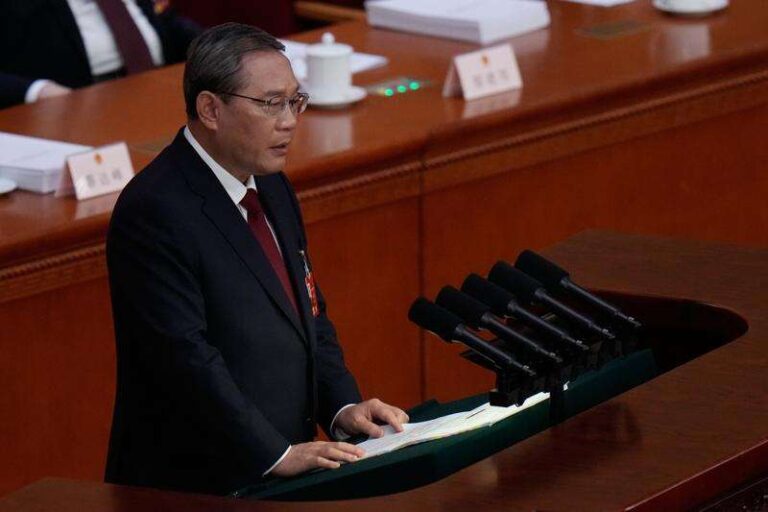
Premier Li Qiang announced a growth goal of 4.5% to 5% in a report delivered at the opening session of the National People’s Congress. The target is slightly below last year’s actual growth rate of 5% and marks the lowest official goal since 1991.
“While recognizing our achievements, we are also clear-eyed about the difficulties and challenges we face,” Li said during a speech that lasted more than an hour as he presented the government’s 35-page work report.
Chinese leaders are attempting to balance two major priorities: reviving economic momentum by boosting domestic consumption while also advancing President Xi Jinping’s long-term strategy to position China as a global leader in advanced technologies such as artificial intelligence and robotics. A key element of that strategy is reducing reliance on foreign suppliers for critical components like advanced semiconductors.
Despite slowing growth, the government signaled it will continue its cautious approach to economic stimulus. The report indicated that Beijing plans to support domestic demand but is unlikely to introduce sweeping new stimulus measures.
Analysts say the leadership remains focused on strengthening industrial independence rather than aggressively expanding household consumption.
China also slightly reduced the planned increase in defense spending. The draft 2026 budget proposes a 7% rise in military expenditures, down from increases of around 7.2% in recent years.
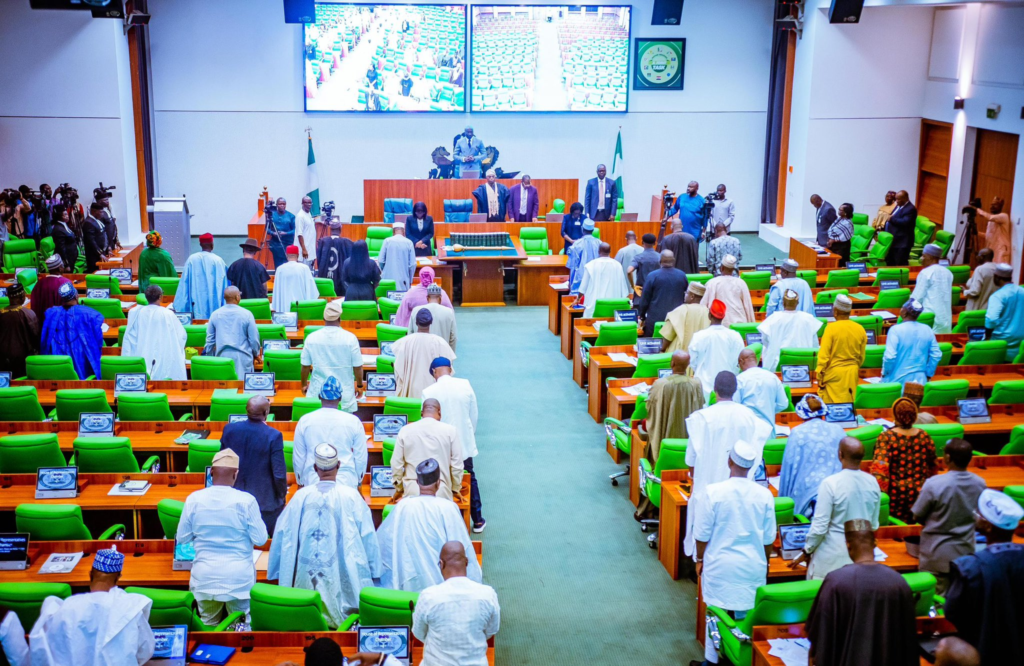
The nearly 3,000-member National People’s Congress — a largely ceremonial body that typically approves policies already decided by the ruling Communist Party — is expected to formally adopt the report and budget at the end of its annual session next week. Lawmakers will also review a new five-year policy blueprint outlining priorities through 2030.
China’s economic outlook is also being shaped by external pressures. Escalating trade disputes and ongoing conflicts abroad are affecting global energy markets. Like much of Asia, China depends heavily on oil and natural gas imports from the Middle East, and rising regional tensions have pushed energy prices higher while threatening supply stability.
The government’s report warned that global free trade is facing increasing strain amid geopolitical rivalries. Domestically, officials highlighted a growing imbalance between strong manufacturing output and relatively weak consumer demand, underscoring the difficulty of shifting the economy toward new sources of growth.
“Rarely in many years have we encountered such a grave and complex landscape, where external shocks and challenges were intertwined with numerous domestic difficulties and tough choices,” Li said.
With domestic consumption sluggish, China has relied heavily on exports to sustain economic expansion. The country posted a record trade surplus of nearly $1.2 trillion last year. However, exports to the United States declined after tariffs imposed by President Donald Trump increased significantly.
Meanwhile, the rapid growth of Chinese exports to other markets has sparked resistance from governments concerned about the impact on their own industries and labor markets.