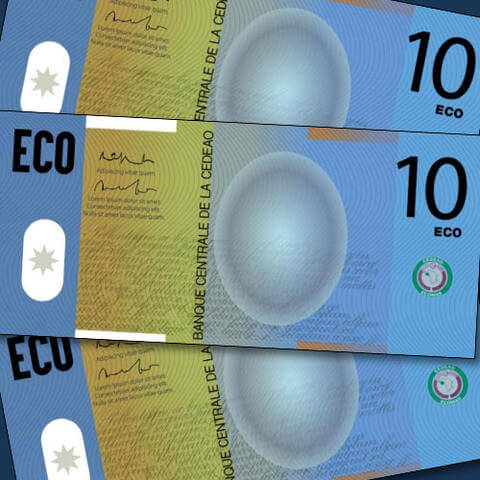
The proposed Eco currency for West Africa is yet to receive a final launch date, despite most member states of the Economic Community of West African States (ECOWAS) reportedly making significant strides in meeting the economic benchmarks required for its introduction.
Sources familiar with the development said discussions on the regional currency gained momentum during a recent meeting of central bank governors and finance ministers from ECOWAS member countries held in Monrovia. According to the sources, 10 of the 12 member states have already met the primary economic requirements known as convergence criteria considered essential for launching the Eco.
Key benchmarks include maintaining a budget deficit of no more than three per cent of GDP, keeping annual average inflation at or below five per cent, limiting central bank financing of government deficits to no more than 10 per cent of the previous year’s tax revenue, and maintaining external reserves sufficient to cover at least three months of imports. Additional conditions require public debt to remain below 70 per cent of nominal GDP and national currencies to fluctuate by no more than 10 per cent against the West African Unit of Account.
“These criteria are intended to ensure that economies participating in the proposed monetary union are stable enough to function effectively under a shared currency framework,” a source explained.
However, the progress report compiled after the Monrovia discussions has not yet been presented to ECOWAS Heads of State for a final decision on the Eco rollout. “The ECOWAS institutions met in Liberia two weeks ago to discuss the convergence criteria which were set by the heads of state for August 2027,” the source said. He added that countries meeting the requirements by the deadline may begin using the Eco, while others could join later, similar to the European Union approach.
Official data indicate that many member states achieved key targets—particularly those related to budget deficits and inflation—towards the end of 2025. Progress has been driven by fiscal reforms, tighter monetary policies, improved coordination between fiscal and monetary authorities, and better food supply conditions. Performance on secondary criteria has also remained positive, with public debt levels declining in several countries and national currencies maintaining relative stability.
“Immediately after COVID, there were other headwinds like geopolitical tensions and many other structural issues that arose, which made countries not meet convergence criteria,” the source noted. “What we’ve seen now within the region is that there is stability in almost all the countries. Most of the countries have embarked on reforms that are yielding positive results.”
The source expressed optimism that further progress will be achieved before the August 2027 target date, after which ECOWAS Heads of State will make the final decision on the currency’s launch.