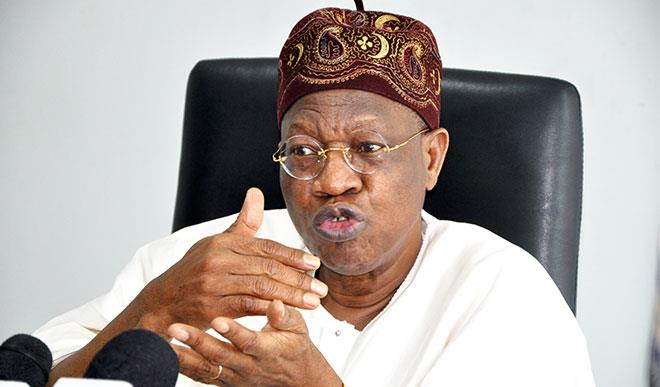
Former Minister of Information and Culture, Lai Mohammed, has reaffirmed that democracy remains the most effective system of governance, even with its shortcomings.
He made the statement during a high-level interactive session at St John’s College, Cambridge, organised by the Cambridge University Nigeria Society, where Nigerian students and scholars in the diaspora discussed governance, democracy, and development.
Mohammed noted that the challenges often associated with democracy are not rooted in the principle of equal voting rights, but in socio-economic conditions that influence voter behaviour. He stressed that improving access to education, healthcare, and infrastructure—especially in underserved communities is key to strengthening democratic outcomes.
He also linked insecurity to poverty, illiteracy, and marginalisation, arguing that military action alone cannot solve such problems. According to him, a broader strategy that includes education and economic empowerment is essential.
Speaking on governance, the former minister described communication as the “lifeblood” of leadership, saying effective governance depends on strategic and credible engagement with citizens.
He highlighted the shift in political communication in the digital era, noting that citizens now actively question and shape public narratives. This, he said, requires governments to be more transparent, responsive, and consistent in their communication.
Reflecting on his time in office, Mohammed said his administration adopted multi-platform communication strategies that combined traditional media, digital platforms, and direct public engagement. He added that governance improved when feedback from citizens was integrated into decision-making.
He also referenced key national issues, including Nigeria’s COVID-19 response, where he said communication played a critical role in promoting safety measures such as mask-wearing, hygiene, and social distancing.
On the $9.6 billion P&ID arbitration case, he said effective communication alongside legal efforts helped reshape international perception of the case as fraud against Nigeria.
Addressing the EndSARS protests, he warned about the dangers of misinformation in escalating crises, noting that false information spreads rapidly in the digital age and can distort public understanding.
He also defended the controversial suspension of Twitter (now X) during his tenure, describing it as a difficult but necessary decision taken in the interest of national security.
Mohammed concluded that governance in the modern era must balance communication, policy, and public trust to remain effective.