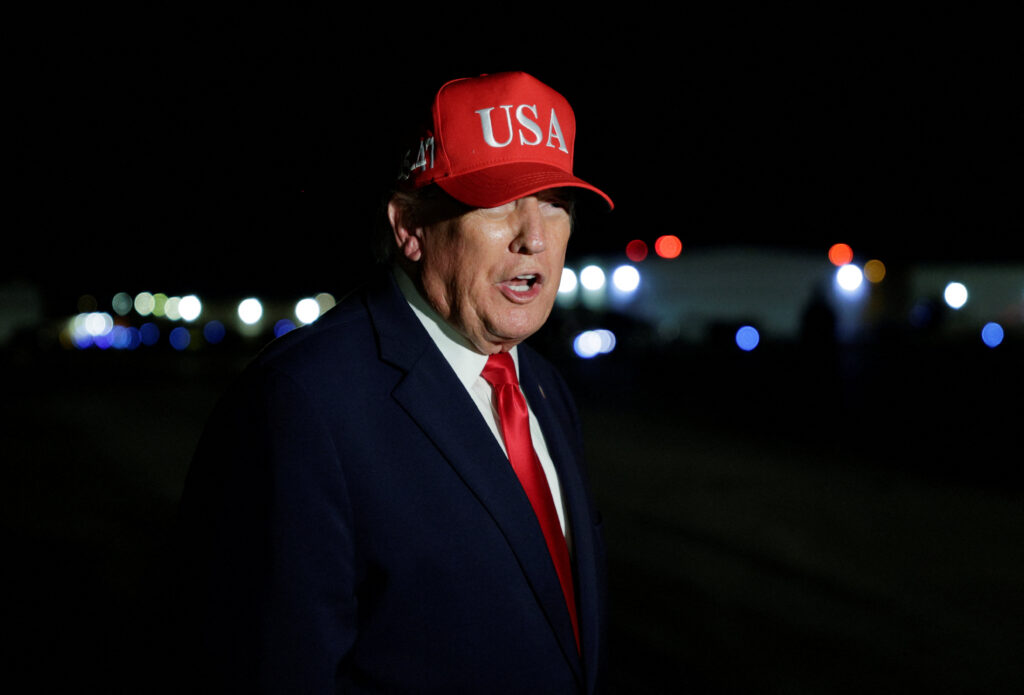
President Donald Trump announced Wednesday that the United States will reduce tariffs on Chinese imports, following a high-stakes meeting in South Korea with Chinese President Xi Jinping that produced agreements on fentanyl control and rare earth minerals.
Trump told reporters aboard Air Force One that his nearly two-hour meeting with Xi resulted in “a great deal for both nations,” with the tariff rate on China related to fentanyl dropping from 20% to 10%. The move effectively lowers the total U.S. duties on Chinese imports from 57% to 47%, he said.
Trump said the tariff reduction came in exchange for a commitment from Xi to “work very hard to stop the flow” of fentanyl — a synthetic opioid that has fueled a deadly drug crisis in the United States.
In addition, the two sides reached a one-year agreement to ensure Beijing will not impose new restrictions on rare earth mineral exports — critical materials used in semiconductors, smartphones, AI systems, and defense technologies.
The understanding effectively removes the threat of 100% U.S. tariffs on Chinese rare earth products, a move markets had feared could escalate global supply chain tensions.
“We have a deal now,” Trump said. “Every year we’ll renegotiate, but I think the deal will go on for a long time. All of the rare earth issues have been settled — and that’s for the world.”
The president described the discussions with Xi as productive and cordial, noting that the two leaders covered a broad range of bilateral issues.
“A lot of decisions were made,” Trump said. “There wasn’t too much left out there. I think this deal will be routinely extended year after year.”
Trump gave the meeting a “12 out of 10”, calling Xi “a great leader of a very strong country.”
“It was an outstanding group of decisions,” he added. “We’ve made tremendous progress.”
As part of the agreement, Trump confirmed that he will visit China in April, with Xi Jinping expected to make a reciprocal visit to the United States later in the year.
The dual announcements mark a rare moment of economic détente between Washington and Beijing, coming amid years of heightened tensions over trade, technology, and security.
If upheld, the new framework could signal a temporary thaw in U.S.–China relations — one centered on pragmatic cooperation in areas of mutual strategic concern, from drug enforcement to supply chain stability.