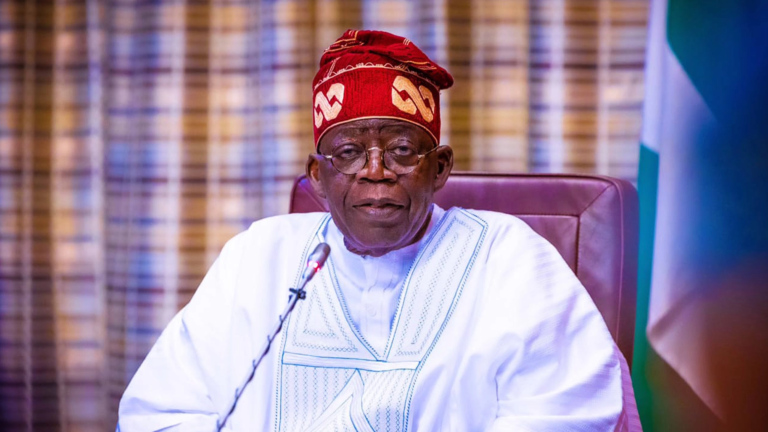
Bola Ahmed Tinubu has said Nigeria attracted nearly $20 billion in foreign direct investment this year, attributing the inflow to ongoing economic reforms aimed at improving transparency, efficiency, and investor confidence.
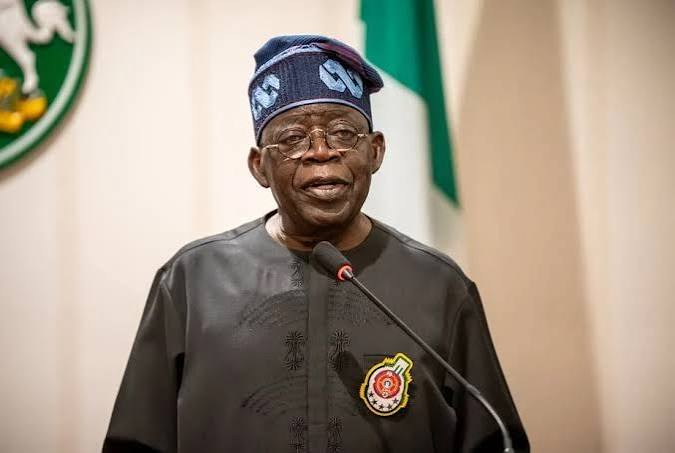
Speaking at a panel session during the Africa CEO Forum, the President said his administration’s policies are positioning Nigeria as a more open and competitive investment destination.
“In Nigeria, we’ve attracted nearly $20 billion in direct investment this year because we are efficient, transparent, and open for business,” Tinubu said.
He stressed that Nigeria would no longer allow the export of raw minerals without local value addition, insisting that the country has the capacity to process its resources into high-value products such as electric vehicle batteries.
“With our metals, we can produce batteries for cars. The private sector brings capital and expertise, but government must de-risk and create the enabling environment,” he said.
Tinubu called for stronger African economic integration and urged countries to fully activate the African Continental Free Trade Area (AfCFTA), saying it must move beyond policy declarations into practical implementation.
“We have the African Continental Free Trade Area—it must not sit on the shelf,” he said, adding that Africa must adopt coordinated trade and resource-sharing strategies.
He also advocated an “Africa First” development model, arguing that African resources should be processed and manufactured within the continent rather than exported in raw form.
“We don’t want scavengers and extractors. We want partners who process and manufacture locally,” he said.
The President cited the Dangote Refinery as evidence of Africa’s capacity for large-scale industrial development, noting that government policy support has helped reduce Nigeria’s dependence on imported petroleum products.
According to him, Nigeria is now a net exporter of PMS, aviation fuel, and other refined products, with output reaching markets across Africa and Europe.
Tinubu also questioned Africa’s reliance on foreign currencies for intra-African trade, urging the adoption of local currency-based exchange systems to reduce costs and instability.
He proposed the creation of an African commodity exchange and a continental credit rating agency, arguing that global rating institutions often misjudge African economies.
On infrastructure, he disclosed that Nigeria is deploying 19,000 kilometres of fibre optic cables nationwide to expand digital connectivity and strengthen the digital economy.
He added that Africa must move beyond basic telecom infrastructure into advanced digital ecosystems, including data processing, artificial intelligence, and e-commerce.
Tinubu concluded by urging African leaders to deepen regional cooperation, saying the continent already has the resources needed for prosperity but must strengthen political will and policy coordination to unlock its full potential.