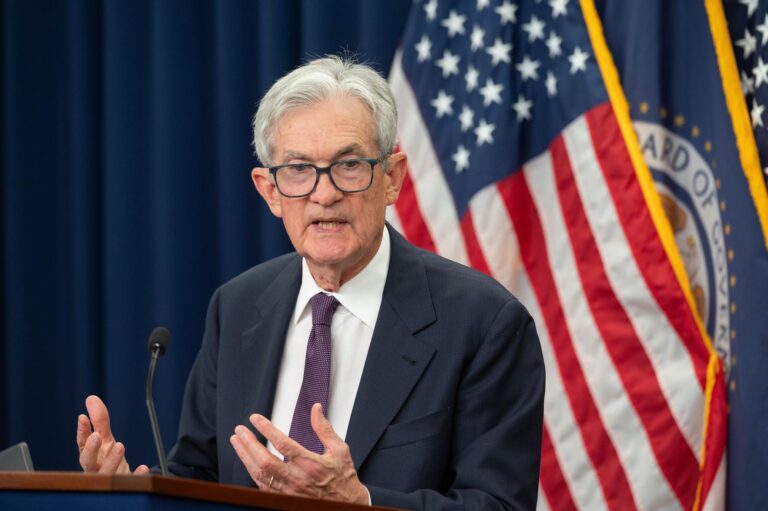
After steering the U.S. economy through a historic pandemic, surging inflation and unprecedented political scrutiny, Jerome Powell is preparing to conclude his eight-year tenure as chair of the Federal Reserve on Friday.
Powell’s time leading the central bank spanned multiple national crises, including the economic collapse triggered by the COVID-19 pandemic, the highest inflation rates in four decades and a federal criminal investigation tied to the Federal Reserve’s headquarters renovation project.
President Donald Trump’s nominee to succeed Powell, Kevin Warsh, is expected to take over leadership of the central bank at a moment when the economy remains resilient in some areas but continues to struggle with renewed inflationary pressure.
Powell said last month that he intends to remain on the Fed’s 12-member Board of Governors after stepping down as chair — an uncommon move that would allow him to continue influencing interest-rate policy until 2028. He has said he plans to resign once an inspector general’s investigation into the Fed’s renovation project is completed.
The leadership change marks the close of a consequential period that included two presidential administrations, three Treasury secretaries and 66 interest-rate decisions.
“You don’t choose your challenges, but you do choose how you respond,” said Claudia Sahm, chief economist at New Century Advisors and a former Fed official. “In the end, Powell’s legacy will be judged by those outcomes.”
When Trump first nominated Powell in 2017, he praised him as a “consensus builder” who understood what was needed to sustain economic growth.
Powell, a former investment banker and Treasury official under President George H. W. Bush, officially became Fed chair in 2018 during a period of economic strength marked by low unemployment and inflation near the central bank’s 2% target.
In his first year, Powell raised interest rates four times — moves that unsettled financial markets but positioned the Fed to respond aggressively if the economy weakened.
That test came quickly.
In early 2020, the COVID-19 pandemic triggered widespread lockdowns across the United States, shutting down major sectors of the economy and leaving millions of Americans unemployed within weeks as businesses across industries such as hospitality and restaurants ground to a halt.