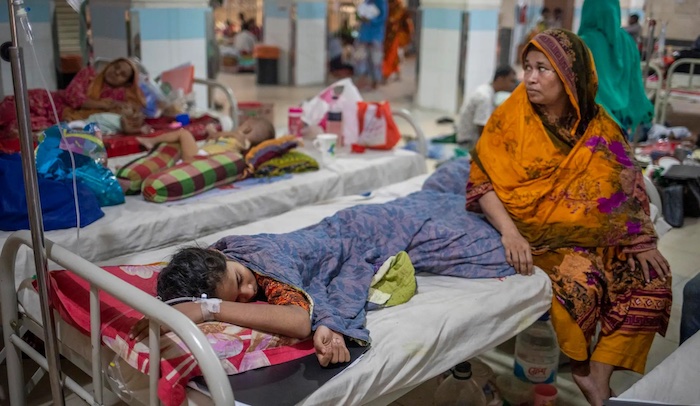
Bangladesh is grappling with a sharp rise in dengue infections and deaths, with health experts warning that August could mark the start of an even deadlier phase of the mosquito-borne disease unless urgent action is taken.
Government figures show that dengue has claimed 101 lives and sickened 24,183 people so far this year. The surge has placed heavy strain on the country’s already overstretched healthcare system. Fatalities are rising rapidly—19 deaths were recorded in the first days of August alone, following 41 in July, more than double June’s toll of 19.
“The situation is critical. The virus is already widespread across the country, and without aggressive intervention, hospitals will be overwhelmed,” said Kabirul Bashar, an entomologist at Jahangirnagar University. He warned that August could see triple the cases reported in July, with numbers potentially peaking in September.
Health officials are urging the public to take preventive measures such as using mosquito repellents, sleeping under nets, and eliminating stagnant water where Aedes mosquitoes—the carriers of the dengue virus—breed.
Experts attribute the surge to a combination of climate change, warm and humid weather, and intermittent rainfall, which create ideal breeding conditions. While Dhaka remains the epicenter of the outbreak, infections are spreading rapidly in rural areas, overwhelming local healthcare facilities that often lack resources to treat severe cases.
Doctors stress the importance of seeking early treatment for symptoms such as severe abdominal pain, vomiting, bleeding, or extreme fatigue to prevent complications and reduce the risk of death.
Calls are growing for coordinated mosquito-control efforts, including widespread spraying, community clean-up drives, and intensified public awareness campaigns.
Bangladesh’s deadliest year for dengue was 2023, when the disease killed 1,705 people and infected over 321,000. With the peak transmission season still ahead, experts say only a united response from government agencies and the public can avert another catastrophic toll.