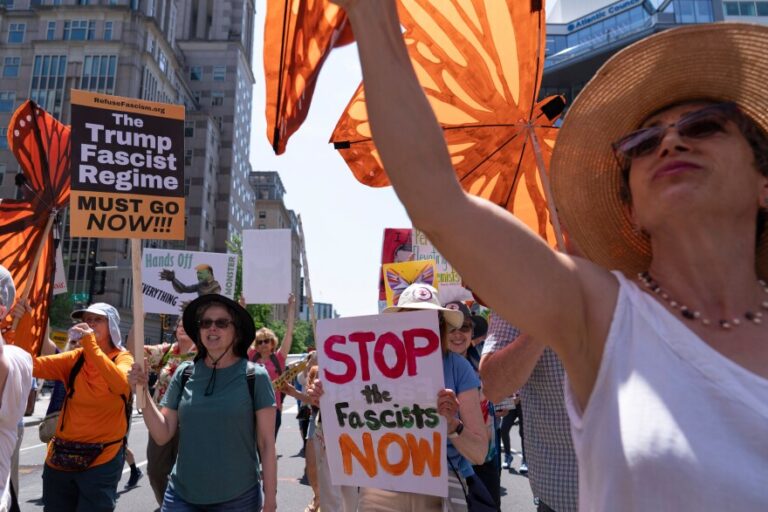
Large-scale demonstrations are expected across the United States on Friday as organizers mobilize for May Day protests opposing policies under U.S. President Donald Trump and what they describe as growing influence of wealthy elites in government.
The coordinated actions, branded “May Day Strong,” are planned in cities nationwide—from Boston to San Francisco—and include calls for workers and students to boycott jobs, classes, and consumer spending. The demonstrations follow earlier anti-Trump rallies organized under the “No Kings” movement, which organizers say drew millions.
May 1, recognized globally as International Workers’ Day, has long been associated with labor activism. In the U.S., it traces back to 19th-century campaigns for an eight-hour workday, culminating in labor reforms such as the Fair Labor Standards Act, signed by Franklin D. Roosevelt, which established standardized work hours.
A key organizer of this year’s protests is the National Education Association, the country’s largest labor union. Its president, Becky Pringle, said the demonstrations aim to refocus national priorities on workers rather than billionaires, citing concerns about underfunded public services like education.
Organizers say more than 500 groups—including labor unions, student organizations, and advocacy networks—are participating. The Sunrise Movement estimates that over 100,000 students could skip school as part of coordinated walkouts.
In North Carolina, anticipated staff absences have already led to the closure of about 20 public school districts. Educators and school workers are planning rallies in Raleigh to push for increased education funding, highlighting ongoing concerns over low teacher pay and per-student spending in the state.
The protests are expected to be among the largest coordinated labor actions in recent years, reflecting rising tensions over economic policy and inequality.