Some Republican leaders in Georgia are calling for new congressional and legislative maps following a recent decision by the Supreme Court of the United States that narrows a key provision of the Voting Rights Act of 1965.
The ruling in Louisiana v. Callais raises the legal bar for challenging electoral maps, requiring plaintiffs to prove intentional racial discrimination rather than just demonstrating that minority voting power was weakened.
Democrats strongly criticized the decision, warning it could undermine fair representation for minority communities. Raphael Warnock called the ruling a “profound defeat for American democracy,” arguing it echoes historical efforts to suppress Black political influence.
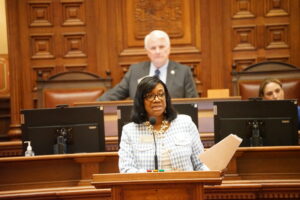
The decision could have significant implications in Georgia, where lawmakers were previously ordered to redraw district lines after a federal court found that existing maps diluted Black voting strength. Republicans, who control the state legislature, are now considering whether to revisit those maps.
Lt. Gov. Burt Jones welcomed the ruling and voiced support for redistricting that does not factor in race. Other Republican figures, including gubernatorial candidate Rick Jackson, have urged lawmakers to take up the issue in a potential special session.
State officials, including Gov. Brian Kemp and House Speaker Jon Burns, said they are reviewing the ruling’s implications but have not committed to immediate action.
Democratic leaders, including House Minority Leader Carolyn Hugley, cautioned against redrawing maps so close to upcoming elections, urging lawmakers instead to focus on economic issues and voter participation.
Advocacy groups warn the ruling could reshape political representation across the South. Analyses suggest it may lead to fewer majority-Black or Hispanic districts and could shift legislative and congressional balances in favor of Republicans.
Political experts say any redistricting efforts could carry risks, as changes in one district may alter the competitiveness of neighboring areas. While immediate changes are unlikely before this year’s elections, the ruling is expected to have long-term effects on how electoral maps are drawn and challenged.