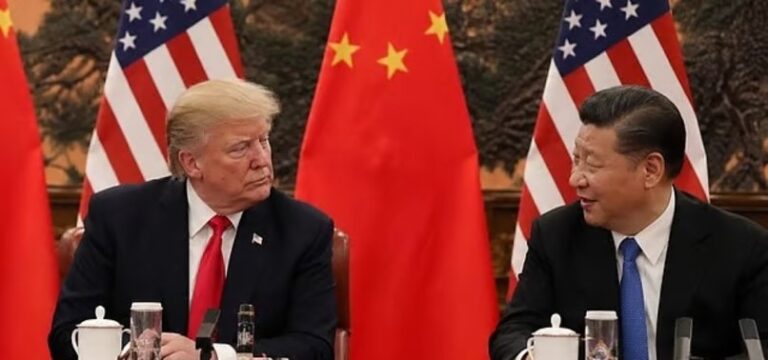
China appears to be seeking a more stable relationship with the United States for the remainder of President Donald Trump’s term — provided Washington avoids actions Beijing views as crossing red lines on Taiwan, one of the most sensitive issues in bilateral relations.
According to a Chinese government summary of Thursday’s meeting between Trump and Chinese President Xi Jinping in Beijing, the two leaders agreed to pursue what Beijing described as a relationship of “constructive strategic stability.”
The Chinese readout said Xi presented the concept as a framework intended to guide ties between the two countries over the next several years.
The phrase did not appear in the official U.S. summary of the talks. However, U.S. Secretary of State Marco Rubio appeared to reference the idea during an interview with NBC News in Beijing.
“One of the things the Chinese emphasize, which we agree, is strategic stability in our relationship,” Rubio said. “A constructive relationship, but also one that establishes strategic stability so that we don’t have misunderstandings that could lead to broader conflict.”
Analysts say the new language suggests Beijing is attempting to manage competition with Washington while limiting the risk of escalation.
Bill Bishop, author of the Sinocism newsletter, said the concept effectively acknowledges the competitive nature of U.S.-China relations while potentially giving Beijing greater leverage in defining what actions it considers unacceptable.
“The Chinese government wants a period of strategic détente,” Bishop wrote, arguing that the framework could help China secure more predictable relations with Washington during Trump’s second term.
Bishop also warned that Beijing could use the new framework to criticize future U.S. measures it opposes, including stricter export controls or efforts to counter China’s industrial policies.
According to Bishop, China could portray such actions as violations of the “constructive China-U.S. relationship of strategic stability” that Xi and Trump personally endorsed during the summit.