Iran has agreed to permit a limited number of Pakistani-flagged vessels to pass through the Strait of Hormuz, a move officials in Pakistan say could help ease mounting global energy pressures.
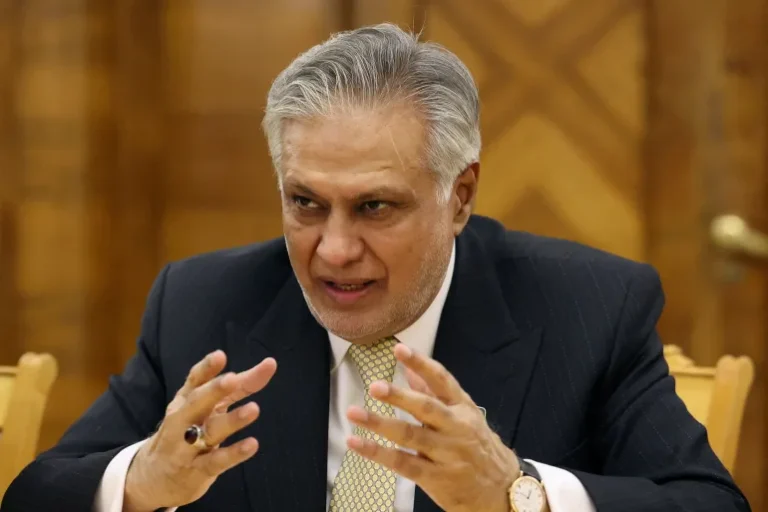
Foreign Minister Ishaq Dar announced the arrangement Saturday, stating that up to two ships per day—part of a total of 20 vessels—would be allowed to transit under the agreement. He described the development as a “harbinger of peace” and a constructive step toward stabilizing the region.
Dar’s statement, directed at senior U.S. officials including Vice President JD Vance, Secretary of State Marco Rubio, envoy Steve Witkoff, and Iranian Foreign Minister Abbas Araghchi, signaled that Islamabad views the move as part of broader diplomatic efforts to reduce tensions.
The strait—through which roughly one-fifth of global oil supply flows—has been largely closed since the outbreak of war following U.S. and Israeli strikes on Iran in late February. The disruption has left nearly 2,000 vessels stranded and driven sharp increases in global energy prices.
Iran has also moved toward formalizing greater control over the waterway. Lawmakers are reportedly drafting legislation that would impose transit fees on ships passing through the strait, framing it as compensation for providing security along the route.
Even before such measures are enacted, the Islamic Revolutionary Guard Corps has already begun regulating traffic through what analysts describe as a de facto checkpoint system, requiring vessels to undergo approval for passage.
The limited reopening for Pakistani vessels may offer a modest reprieve, but analysts caution that broader disruptions remain in place, with global markets still vulnerable to further escalation in the region.