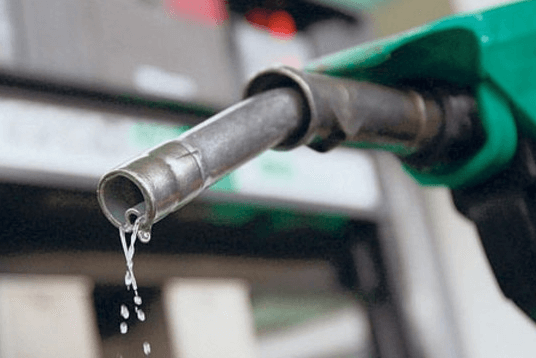
The Federal Government has halted the issuance of import licences for premium motor spirit (PMS), widely known as petrol, as part of efforts to strengthen Nigeria’s domestic refining capacity.
The move aligns with the Petroleum Industry Act 2021, which bars the issuance of fuel import licences where local production is sufficient to meet national demand.
George Ene-Ita, Head of Public Affairs at the Nigerian Midstream and Downstream Petroleum Regulatory Authority (NMDPRA), confirmed that no import licences have been granted this year.
“We have not issued import licences this year because local production has met national requirements for PMS. There is no need to issue licences when domestic sources can adequately supply the market. Should there be a shortfall, the situation will be assessed,” Ene-Ita said.
Data from NMDPRA indicates that the Dangote Refinery currently meets about 64% of the country’s petrol demand, supported by rollover stock from previous months. Major oil marketing companies, including TotalEnergies SE, Conoil Plc, and MRS Nigeria Plc, which collectively imported about 25% of Nigeria’s petrol requirements in January, now have their import licences suspended.
The suspension is expected to benefit the Dangote Refinery, which can refine 650,000 barrels of crude oil per day and is currently operating at about 78% capacity.
Industry experts have welcomed the decision as a step toward strengthening Nigeria’s energy security and attracting private investment in refining.
Muda Yusuf, CEO of the Centre for the Promotion of Private Enterprise (CPPE), described the policy shift as a boost to investor confidence. He added that redirecting funds previously spent on petrol imports could conserve foreign reserves and support other sectors of the economy.
“Fears of a shortfall should not arise. Dangote Refinery has a large storage capacity, and the Nigerian National Petroleum Company Limited also maintains strategic reserves,” Yusuf said.
“The PIA 2021 provides for such contingencies. This is good news for the economy and for investors in the sector.”
Similarly, Abubakar Maigandi, National President of the Independent Petroleum Marketers Association of Nigeria (IPMAN), urged stakeholders to fully support domestic refining.
“Since Dangote Refinery can meet local demand, there is no need to import petrol. The government and stakeholders should ensure that crude oil is readily available for its operations,” Maigandi said, emphasizing the importance of local production amid global crude oil market uncertainties.
The suspension of import licences marks a significant step in Nigeria’s push to reduce dependence on imported fuel and consolidate its refining industry.