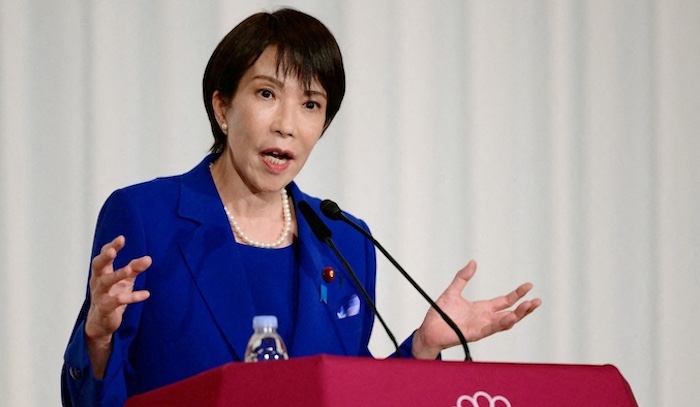
Hardline conservative Sanae Takaichi is on the brink of becoming Japan’s first female prime minister after striking a coalition agreement with the right-wing opposition Japan Innovation Party (Ishin), a move that secures her path to power ahead of Tuesday’s parliamentary leadership vote.
“I told Takaichi that we should move forward together,” said Hirofumi Yoshimura, Ishin’s leader and the governor of Osaka, speaking to reporters Monday. He confirmed that he would meet Takaichi later in the evening to finalise the alliance.
Earlier in the day, Yoshimura and Ishin co-leader Fumitake Fujita briefed party lawmakers on the coalition framework. News of the impending deal sent financial markets surging — the Nikkei index rose nearly 3 percent to a record high, while the yen weakened amid expectations of expanded fiscal spending under a Takaichi government.
Under the agreement, the ruling Liberal Democratic Party (LDP) and Ishin would hold a combined 231 seats in the lower house — just two shy of an outright majority but sufficient to ensure Takaichi’s victory in the Diet vote to choose Japan’s next leader. She needs only a majority of ballots cast, not of all members, in a potential runoff.
Even with Ishin’s backing, Takaichi will likely need to court smaller opposition parties to pass her first supplementary budget and consolidate her government.
The coalition deal follows the dramatic breakdown of the LDP’s 26-year alliance with Komeito, which pulled its support after Takaichi’s election as party leader. Komeito’s exit had briefly raised the prospect of an opposition-led government — a scenario now averted by Ishin’s decision to side with the LDP.
Known as a fiscal dove, Takaichi has pledged tax cuts and increased public spending to cushion Japanese households against rising inflation. She has also criticised the Bank of Japan’s interest rate hikes, arguing they stifle growth.
“Expectations for Takaichi’s economic policies, which include fiscal expansion and monetary easing, appear to be driving up share prices and weakening the yen,” said Fumika Shimizu, strategist at Nomura Securities.
However, analysts caution that Ishin’s small-government stance and focus on fiscal restraint could limit Takaichi’s ability to pursue large-scale stimulus measures.
On foreign and defence policy, Takaichi advocates revising Japan’s pacifist constitution to formally recognise its military and has called for higher defence spending to counter China’s regional influence. She is also known for her visits to Tokyo’s Yasukuni Shrine, which some of Japan’s Asian neighbours regard as a symbol of wartime aggression.
Domestically, Takaichi supports stricter immigration controls and traditional family policies, opposing measures such as allowing married women to retain their maiden names — reforms she argues undermine Japanese social values.
Yoshimura said Ishin would not immediately seek cabinet posts in the new government, citing the party’s lack of governing experience.
“Right now, we’re still a group of lawmakers with no experience in government,” he said in a televised interview. “Rather than asking for ministerial positions, we want to focus first on implementing our policies as part of the ruling coalition.”
If confirmed, Takaichi’s rise would mark a historic first for Japan, breaking a long-standing gender barrier in Japanese politics — and ushering in a new era of conservative leadership defined by fiscal activism, nationalist sentiment, and coalition pragmatism.