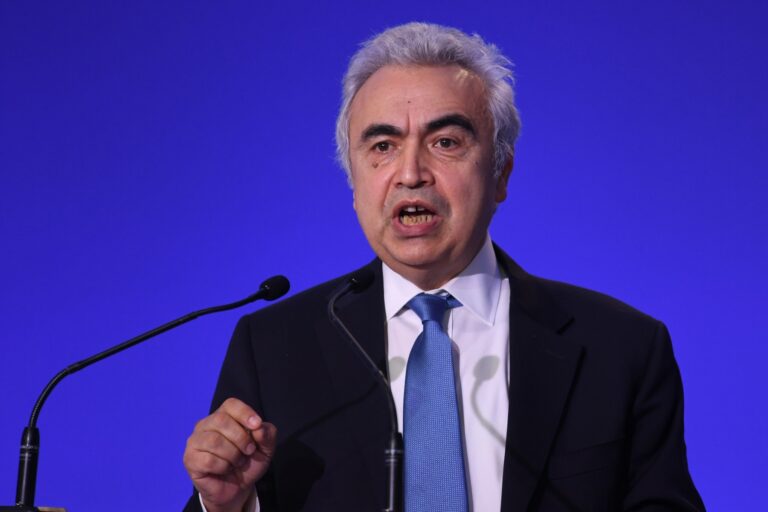
Global oil demand growth is decelerating sharply due to a slowdown in China’s economy and the rapid adoption of electric vehicles, according to International Energy Agency (IEA) Executive Director Fatih Birol.
In an interview this week, Birol pointed to shifting consumption patterns that are reshaping the global oil landscape after decades of Chinese-driven demand growth.
“Global oil demand growth is slowing down—mainly because of China,” Birol said. “In the past ten years, more than 60% of global oil demand growth came from China alone. The rest of the world combined contributed just 40%. That dynamic is now reversing.”
Birol attributed the downturn in oil demand largely to China’s cooling economy, citing consensus among international financial institutions and Chinese officials themselves.
“Everyone agrees—whether it’s the IMF, the Communist Party, or major banks—that China’s economic growth is not what it used to be,” Birol said. “Add to that the accelerating adoption of electric vehicles, and you have a major shift in global energy consumption.”
The IEA’s forecasts for 2024, which had predicted that global oil demand would grow by less than 1 million barrels per day, were met with skepticism at the time. However, Birol said recent data has validated the agency’s projections.
“Some argued it would never fall below 2 million barrels per day. At year’s end, we were right. But no one made headlines about it—we’re used to that,” he said.
While demand slows, oil supply is surging—particularly from the Western Hemisphere. Birol identified what he called the “American Quintet”—the U.S., Canada, Brazil, Argentina, and Guyana—as driving record production increases.
“The strongest production growth is coming from the United States,” he noted. “But all five are contributing. This growth is significant.”
Birol emphasized that despite the supply boom, continued investment in oil remains essential due to the natural decline of aging oil fields.
“Oil fields, like human beings, eventually peak and decline,” he said. “Ninety percent of current oil investment goes into offsetting that decline. Only 10% is directed toward meeting new demand.”
Despite geopolitical uncertainty—including tensions in the Middle East—oil prices remain relatively stable, with Brent crude hovering around $60 per barrel.
Birol attributed this to the imbalance between strong supply and weakening demand, which has kept markets well-stocked and prices subdued.
“There is a lot of oil in the market. Even with all that’s happening in the Middle East and globally, prices are stable. That says something,” he said.
Birol also sounded the alarm on Europe’s energy vulnerabilities, calling the continent’s current situation a consequence of decades of flawed strategic decisions.
“Energy prices are too high. That’s a huge problem for European competitiveness,” he warned. “But more importantly, energy security is under serious threat.”
He pointed to what he described as three “historic strategic mistakes” made by European leaders over the past 30 years, which he said have had lasting consequences on the continent’s economy, foreign policy, and even its defense posture.