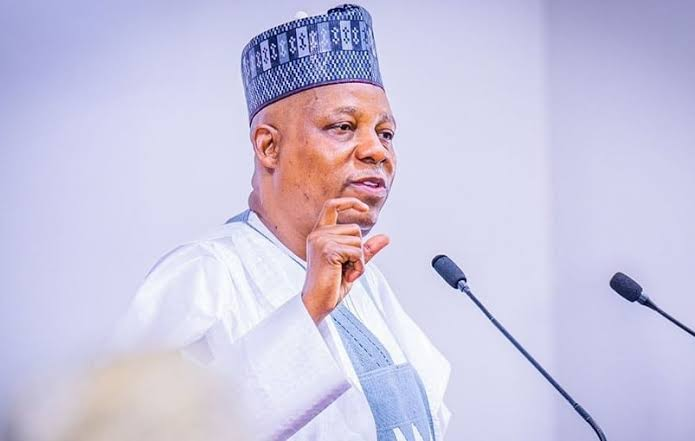
Dr. Yusuf Baba-Ahmed, vice presidential candidate of the Labour Party (LP) in the 2023 general election, has affirmed Julius Abure as the legitimate National Chairman of the party, citing the Supreme Court ruling and the Independent National Electoral Commission (INEC)’s recognition of Abure’s leadership.
Speaking on a national television programme on Wednesday, Baba-Ahmed acknowledged that although he had previously aligned with a faction led by Senator Nenadi Usman, the prevailing legal framework now supports Abure’s position.
“When INEC raised issues about Abure’s tenure, we responded legally and legitimately in Umuahia,” Baba-Ahmed said, referencing the controversial NEC meeting convened by Abia State Governor Alex Otti, where Usman was reappointed as interim chairman and Senator Darlington Nkwocha as interim secretary with support from LP presidential candidate Peter Obi and NLC President Joe Ajaero.
However, Baba-Ahmed now concedes that INEC’s current recognition of Abure makes his leadership legally valid. “We are law-abiding citizens. Right now, INEC has been dealing with Julius Abure. So, as far as law is concerned, it is in order to relate with Abure,” he stated. “If the Supreme Court gives another interpretation in favour of Nenadi Usman, we will abide. The law is the law.”
In a significant political move, Baba-Ahmed also declared his intention to contest for president in 2027, making the announcement during the Abure-led NEC meeting held in Abuja earlier this week. His declaration adds another layer to the ongoing leadership crisis in the Labour Party, where tensions persist between factions loyal to Obi and those aligned with Abure.
Baba-Ahmed cautioned against external interference in party affairs, warning that powerful interests are attempting to manipulate LP’s internal processes. “Labour Party members are being remote-controlled by powerful forces, but this won’t continue forever,” he said.
His comments come at a time of growing internal discord within the party, even as stakeholders grapple with questions about leadership legitimacy and future direction ahead of the 2027 elections.