President Donald Trump on Saturday sharply criticized the federal judge who blocked his proposed overhaul of the John F. Kennedy Center for the Performing Arts, calling the ruling politically motivated and warning that the institution could face an uncertain future.
In a lengthy post on Truth Social, Trump attacked U.S. District Judge Christopher Cooper, describing him as an “anti-Trump hater” after the judge ruled that the administration could not proceed with plans to rename the Kennedy Center or undertake a sweeping renovation project without congressional approval.
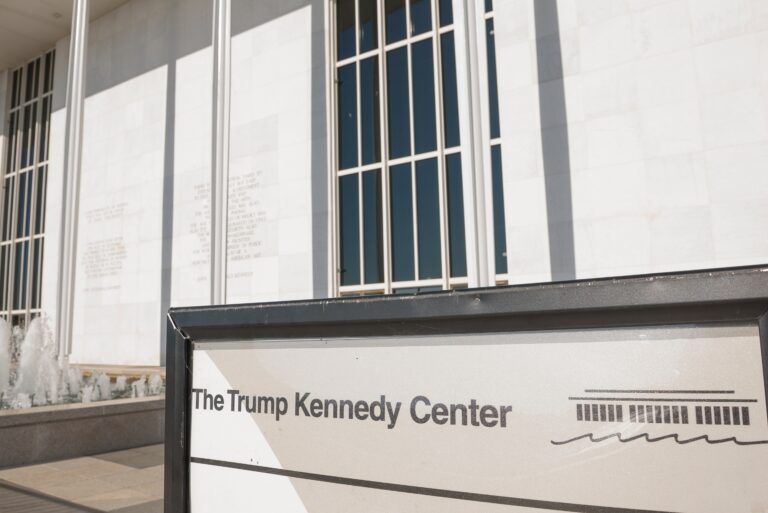
The ruling also ordered the removal of Trump’s name from the building and related materials within two weeks.
Trump argued that the decision represented another example of what he characterized as unfair treatment by the courts, linking the setback to previous legal defeats, including the Supreme Court’s rejection of portions of his tariff agenda earlier this year.
The president also suggested that the Kennedy Center’s future could be in jeopardy, predicting that the renowned performing arts venue might eventually close and never reopen if the proposed renovation project does not move forward.
Despite previously championing the overhaul, Trump indicated he is stepping back from the effort and plans to return decision-making authority over the institution to Congress.
“Cancel it,” Trump wrote, comparing the move to his decision to end his involvement with the Kennedy Center following the court ruling.
The White House did not immediately clarify whether Trump intends to remain chairman of the center’s board.
The court’s decision has been welcomed by critics of Trump’s plans, including artists and legal advocates who argued that the proposed changes threatened the institution’s nonpartisan mission.
Norm Eisen, who is involved in litigation challenging Trump’s Kennedy Center initiatives, said the president’s apparent withdrawal could help restore confidence among performers and audiences.
“I have already heard from artists and audience members who are excited about the Kennedy Center returning to nonpartisan normality,” Eisen said in a statement.
He added that the implementation of the court’s order, including the removal of Trump’s name from the facility, could mark the beginning of a broader effort to restore the institution’s traditional role as one of the nation’s leading cultural venues.
The legal dispute centers on Trump’s attempt to rename and significantly reshape the Kennedy Center, which Congress established in 1964 as a living memorial to President John F. Kennedy. Judge Cooper ruled that only Congress has the authority to alter the institution’s name or fundamental governing structure.