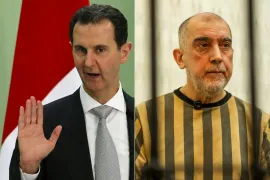
A Syrian court has sentenced former President Bashar al-Assad, his brother Maher al-Assad and cousin Atef Najib to death after convicting them of serious crimes committed during Syria’s nearly 14-year conflict.
The Criminal Court in Damascus handed down the sentences on Tuesday, marking a major development in efforts by Syria’s transitional authorities to prosecute senior figures from the former government.
Bashar al-Assad, who was removed from power in December 2024 and is now living in exile in Russia, was convicted in absentia of premeditated murder, torture and crimes against humanity.
His younger brother Maher al-Assad, who is also believed to be living in Russia, was sentenced to death in absentia after being convicted of premeditated murder and torture.
Their cousin Atef Najib, the former head of political security in the southern province of Deraa, was sentenced to death for crimes against humanity.
Unlike the Assad brothers, Najib was present in court. He was detained by Syrian authorities in January last year and stood inside a cage wearing a prison uniform as the judge delivered the verdict.
Najib played a central role in the government’s violent crackdown on demonstrations in Deraa in 2011, protests that helped ignite the nationwide uprising and subsequent civil war.
According to the court, Najib was convicted of crimes including murder, the intentional killing of children under the age of 15 and torture resulting in death.
Judge Fakhr al-Din al-Aryan said testimony presented during the proceedings established Bashar al-Assad’s responsibility as the country’s “highest decision-maker.”
The court found that Assad used state institutions to facilitate crimes committed during the conflict.
Tuesday’s ruling represents the first major convictions under Syria’s transitional authorities, which began prosecuting officials from the former government earlier this year.
For some Syrians, the verdicts represent a significant moment of accountability after years of conflict, repression and allegations of widespread abuses under the former government.
However, with Bashar and Maher al-Assad living outside Syria, the sentences against them were issued in absentia, leaving their enforcement dependent on whether they are eventually brought into Syrian custody.