The mass industrial action, described as Spain’s first general strike in 14 years, comes less than three weeks before a crucial national election that could significantly reshape the country’s political landscape and potentially bring the far right to power.
The strike has affected major sectors of Spain’s economy, the fourth-largest in the eurozone, with widespread transport delays, factory shutdowns and reduced operations at schools and universities.
In Madrid, heavy rainfall compounded disruptions to public transportation, particularly city bus services. The capital is also experiencing an ongoing teachers’ strike that began nearly a month ago over demands for improved working conditions.
Meanwhile, Barcelona, Spain’s second-largest city, experienced severe transportation disruptions during the morning rush hour, leaving commuters facing lengthy delays and limited services.
Trade unions have organized demonstrations in Madrid, Barcelona and several other cities, with thousands of workers expected to march through major streets to demand government intervention in the housing market.
Spain’s two largest labor unions, the General Union of Workers (UGT) and Workers’ Commissions (CCOO), said the strike had received substantial support across several strategic sectors of the economy.
According to the unions, work stoppages reached 90 percent in the automotive and port industries, 85 percent in the meat-processing sector, 82 percent in waste collection and 75 percent in the energy industry.
The figures highlight the scale of industrial disruption as workers demand urgent measures to address rising housing costs and growing financial pressures on households.
For many demonstrators, the strike represents an opportunity to demonstrate the economic influence of workers who are increasingly struggling to afford rent and mortgage payments.
Spain’s housing crisis has become a major political issue, with workers and tenant organizations demanding stronger government action to make accommodation more affordable.
Sandra Mora, spokesperson for the Tenants’ Union, emphasized that workers have the collective power to disrupt economic activity and compel political leaders to respond to their concerns.
Speaking to Spanish national broadcaster RNE, Mora said workers, many of whom are renters or homeowners paying mortgages, must recognize their ability to influence government policy through coordinated industrial action.
The demonstrations reflect growing frustration over housing affordability and the financial burden facing working families.
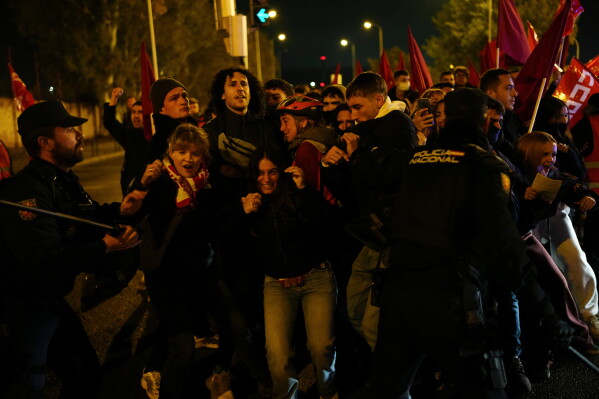
Although much of the industrial action proceeded peacefully, authorities reported isolated disturbances during the early hours of the strike.
In Barcelona, protesters erected roadblocks, with some setting tires ablaze, disrupting traffic in parts of the city.
Near Madrid’s main wholesale market on the outskirts of the capital, minor confrontations were reported between picketers and police officers.
Earlier, striking workers gathered in public squares across Barcelona shortly after midnight, setting off fireworks to mark the beginning of the nationwide protest.
Organizers have called for further demonstrations throughout Wednesday as they seek to maintain pressure on government authorities.
The nationwide strike comes at a politically sensitive moment for Prime Minister Pedro Sánchez’s government, which faces a challenging election amid growing public dissatisfaction over housing affordability and other economic concerns.
With the national vote approaching, the housing crisis is emerging as a significant issue in political debate, increasing pressure on parties to present credible solutions.
The possibility of a far-right electoral breakthrough has added further significance to the demonstrations, with the election potentially determining the direction of Spain’s housing, labor and economic policies.
For labor unions, the strike represents more than a protest against rising living costs. It is also an attempt to place workers’ economic security at the center of the national political agenda.
As industrial disruptions continue and demonstrators gather across the country, attention is turning to how the government will respond to demands for affordable housing and whether the mounting public pressure will influence the outcome of the approaching election.