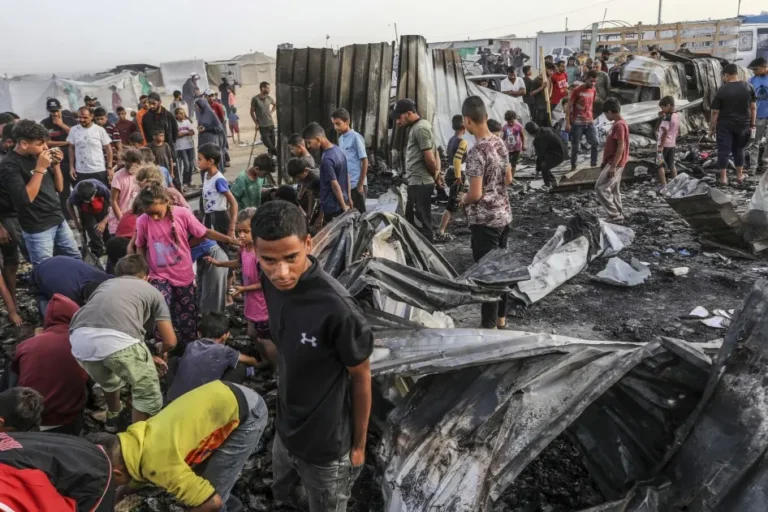
Gaza is facing a “catastrophic” public health emergency that could affect its people for generations, the World Health Organization (WHO) warned Monday, calling for immediate and unrestricted humanitarian access to the besieged enclave.
Dr. Tedros Adhanom Ghebreyesus, WHO Director-General, described the situation as “beyond words,” citing a devastating combination of famine, mass injuries, disease outbreaks, and the near-total collapse of healthcare services.
“Combine famine with overwhelming mental health trauma, and you have a crisis for generations to come,” Dr. Tedros said.
The warning comes as a U.S.-brokered ceasefire between Israel and Hamas enters its second week. While Israel has allowed some humanitarian supplies to enter Gaza, Dr. Tedros said the volume of aid remains “far below what is required” to rebuild the shattered health system.
He welcomed the truce but lamented that the anticipated surge in aid deliveries “hasn’t materialised.”
Thousands of injured and sick Gazans remain without access to care, as hospitals struggle with shortages of fuel, medicine, and equipment. According to Dr. Tedros, 700 patients have died waiting for medical evacuation flights, which have been suspended for two weeks due to Israeli religious holidays.
He urged the immediate resumption and expansion of medical evacuations, saying thousands more are still waiting for life-saving treatment abroad.
Dr. Tedros also condemned the confiscation of medical supplies at Israeli-controlled crossings. He said materials essential for rebuilding hospitals — including tent poles for field facilities — have been blocked under claims they could be “dual-use” items.
“If you can’t bring in tent poles, how do you set up a field hospital?” he asked.
Currently, only two crossings — Kerem Shalom and Kissufim — are open, but the flow of aid remains critically low. Dr. Tedros said 600 aid trucks per day are needed to meet basic needs, yet only 200 to 300 are entering.
He insisted that humanitarian assistance must be “de-linked from politics.”
“Aid should not be weaponised,” he said, condemning the conditions reportedly tied to the return of deceased Israeli hostages.
“There should be no conditions,” he added. “Especially after the hostages were released, further restrictions are unjustified.”
Dr. Tedros said the United States, as the key broker of the ceasefire, bears “moral responsibility” to ensure both parties uphold their commitments, particularly regarding humanitarian access.
The UN’s World Food Programme (WFP) reports that 6,700 tonnes of food have entered Gaza since October 10 — far short of the 2,000 tonnes per day required to reverse the food crisis.
Although aid agencies say conditions are beginning to “turn the tide” on famine, they warn that Gaza’s recovery will take decades. A UN-backed assessment in July confirmed that famine conditions were present, though Israel disputes that finding.
The estimated cost to rebuild Gaza stands at $70 billion, with nearly 10% needed for healthcare alone. Dr. Tedros cautioned that the mental health toll could “overwhelm future generations.”
“This is a crisis that will echo through time,” he said. “Many celebrated the ceasefire in the streets. Now, some of those same people are dead. That is the cruelty of a broken peace.”