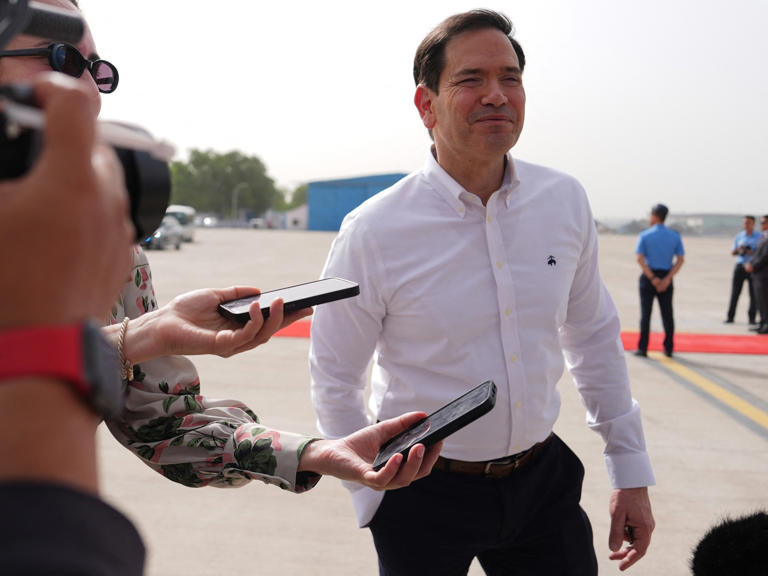
Marco Rubio sought to lower expectations for an imminent agreement to end the U.S.-Israeli conflict with Iran while speaking to reporters during an overnight stop en route to Agra as part of his visit to India.
Rubio described negotiations with Iran as still “a work in progress,” though he expressed optimism that discussions surrounding the reopening of the Strait of Hormuz were moving in a positive direction.
“We have what I think is a pretty solid thing on the table in terms of their ability to open up the straits, get the straits open, enter into a very real, significant, time-limited negotiation on the nuclear matters, and hopefully we can pull it off,” Rubio said.
He suggested delays in reaching a final agreement stem largely from internal dynamics within the Iranian government, referring to what he described as the “Iranian system.”
Addressing the separate conflict involving Lebanon, Rubio said U.S. officials are handling negotiations there independently from talks involving Iran.
“Lebanon, we’re working on separately,” Rubio said. “We have a 45-day ceasefire. We’ve had weekly meetings now, and ongoing daily engagements between the government of Lebanon and Israel.”
Rubio argued that the central obstacle to lasting peace in Lebanon remains Hezbollah.
“The problem is not Lebanon and Israel; the problem is Hezbollah,” he said. “As long as an armed Hezbollah exists, it’s going to be hard to achieve peace in Lebanon.”
Asked whether a broader ceasefire would require Israel to halt military strikes inside Lebanon, Rubio defended Israel’s security actions, saying the country maintains the right to defend itself against attacks launched from Lebanese territory.
He added that the issue continues to be addressed within ongoing ceasefire discussions and broader diplomatic negotiations.