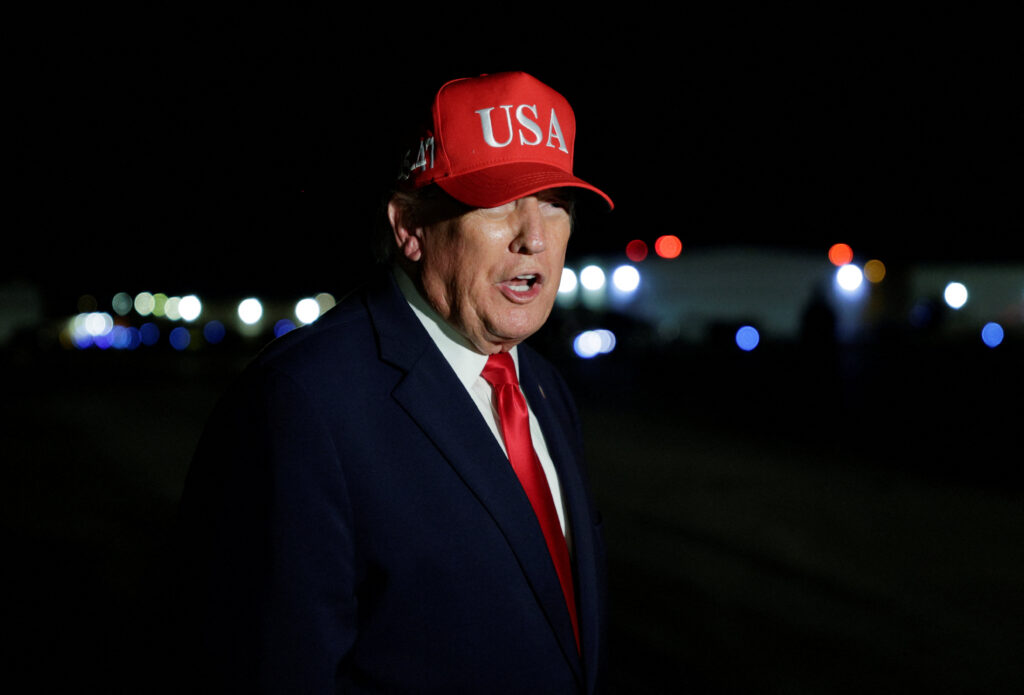
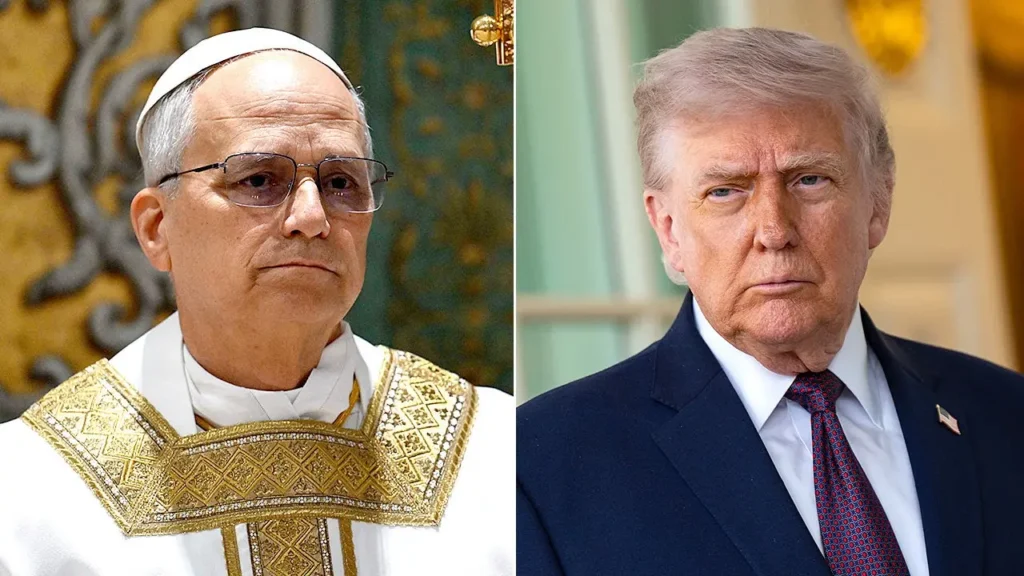
President Donald Trump announced Friday a sweeping escalation in the ongoing U.S.–China trade dispute, declaring that his administration will implement new 100% tariffs on all Chinese imports starting November 1, citing what he described as Beijing’s “extraordinarily aggressive” posture on export controls.
In a post on his social media platform, Trump accused China of issuing a “hostile letter to the world” announcing its own plans to restrict exports of critical goods and materials—some of which, he claimed, are not even produced in China.
“It has just been learned that China has taken an extraordinarily aggressive position on Trade… effective November 1st, 2025, [they will] impose large-scale Export Controls on virtually every product they make,” Trump wrote. “This is unprecedented and a moral disgrace.”
Trump’s announcement sent financial markets reeling. The Dow Jones Industrial Average fell 385 points (0.8%), while the S&P 500 dropped 1.25% and the Nasdaq slid 1.75%, reflecting investor anxiety over a potential collapse in the fragile trade truce that has been in place for months.
Tariffs on Chinese goods currently sit at around 30%, down from their 145% peak earlier this year. The newly announced tariffs will be “over and above” existing duties, Trump said.
In addition to the tariff hike, Trump announced plans to impose U.S. export controls on all critical software, though details on which technologies would be included remain unclear.
“There is no way that China should be allowed to hold the world captive,” Trump posted earlier, adding, “But that seems to have been their plan for quite some time.”
Trump’s decision came just one day after Beijing announced new restrictions on the export of rare-earth minerals, crucial components in semiconductors, electric vehicles, and other high-tech products. The move was widely interpreted as an attempt to leverage China’s dominance in the rare-earths market amid intensifying geopolitical tensions.
Describing China’s latest actions as “shocking” and unexpected, Trump told reporters from the Oval Office:
“This is not something I instigated. This was a response to what they did. And they didn’t just aim it at us — they aimed it at the whole world.”
The trade escalation has also cast uncertainty over a planned meeting between Trump and Chinese President Xi Jinping at the upcoming APEC summit in South Korea. While Trump initially hinted at a cancellation, saying “there seems to be no reason to do so now,” he later clarified that no final decision had been made.
“We’ll see what happens,” he said, leaving the door open to talks amid rising tensions.
The current U.S.-China trade truce, agreed upon earlier this year to allow space for negotiations, is set to expire in just under a month. Trump’s new tariffs — coupled with China’s own restrictions — may signal the end of that fragile détente and the start of a renewed trade war with global economic repercussions.
Trump has long made tariffs a centerpiece of his foreign policy and economic strategy, especially in dealings with China. Whether this new escalation yields concessions or further hardens stances on both sides remains to be seen.