China’s foreign minister sharply criticized a record U.S. arms sale to Taiwan on Tuesday as Beijing conducted a second consecutive day of military drills around the self-governing island, which China claims as its own.
Speaking at a year-end diplomatic event in Beijing, Foreign Minister Wang Yi condemned both Washington’s decision to supply advanced weapons to Taiwan and what he described as “pro-independence forces” on the island. He also directed unusually strong criticism at Japan’s leadership.
“In response to continuous provocations by pro-independence forces in Taiwan and the large-scale U.S. arms sales to Taiwan, we must resolutely oppose and strongly counter them,” Wang said while reviewing China’s diplomatic priorities.
Wang reiterated Beijing’s goal of “complete reunification” with Taiwan, which separated from mainland China following the Chinese civil war in 1949 and later developed into a multiparty democracy. Taiwan’s government rejects Beijing’s sovereignty claims, arguing the island has never been governed by the People’s Republic of China under Communist Party rule.
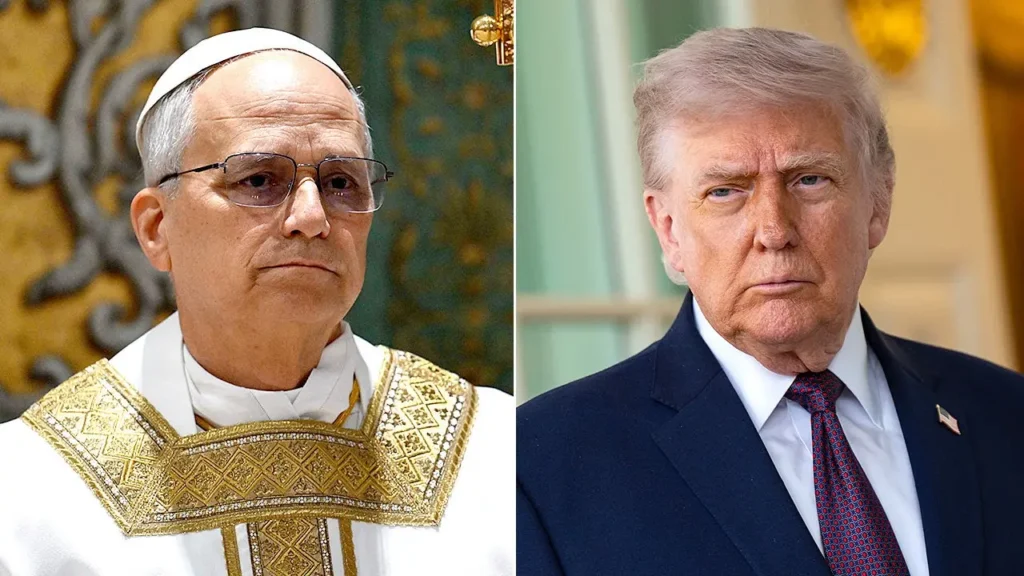
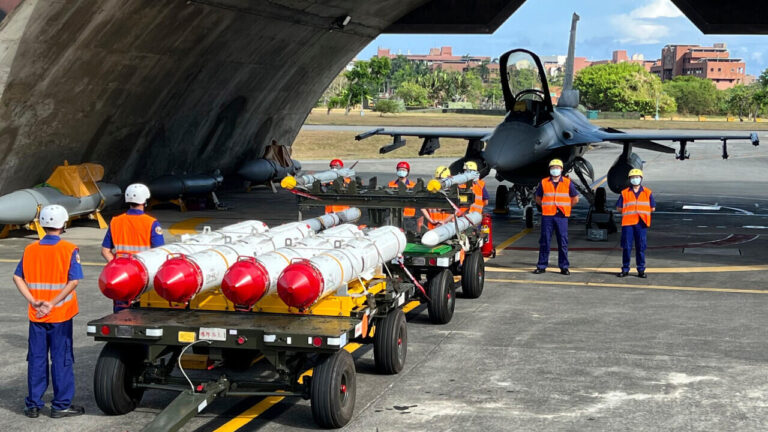
The U.S. State Department earlier this month approved an arms package valued at more than $11 billion—the largest such sale to Taiwan to date. The package includes missiles, drones, artillery systems, and military software. Under U.S. law, Washington is required to provide Taiwan with defensive capabilities. President Donald Trump has also pressed Taiwan to significantly increase its defense spending, at times suggesting it should allocate up to 10% of its GDP to military preparedness.
China responded to the arms sale by launching large-scale military exercises around Taiwan on Monday, which continued into Tuesday. The drills were also widely interpreted as a rebuke to Japan’s new prime minister, Sanae Takaichi, who angered Beijing last month by suggesting Japan could intervene militarily if tensions over Taiwan escalated.
“Japan, which launched a war of aggression against China, has failed to deeply reflect on its historical crimes,” Wang said, accusing current Japanese leaders of challenging China’s territorial sovereignty and the post–World War II international order. He added that China must remain “highly vigilant against the resurgence of Japanese militarism.”
In his broader review of global diplomacy, Wang also addressed the war in Gaza, saying the international community must do more than pursue a ceasefire.
“The world still owes Palestine justice,” he said, adding that the Palestinian cause for “democratic and legitimate rights” must not be sidelined. China maintains ties with both Israel and the Palestinian Authority and supports a two-state solution.
Wang further emphasized China’s desire to help facilitate a peace agreement between Russia and Ukraine. While Beijing insists it is neutral in the conflict, it has maintained close political and military ties with Moscow, including joint exercises and high-level visits.
He also highlighted China’s recent mediation efforts in Asia, citing talks earlier this week between senior diplomats from Thailand and Cambodia that helped solidify a ceasefire following months of border clashes.
The remarks underscored Beijing’s broader strategy to expand its role as an international mediator, particularly in regional disputes, as China seeks to strengthen its diplomatic influence alongside its growing economic and political power.