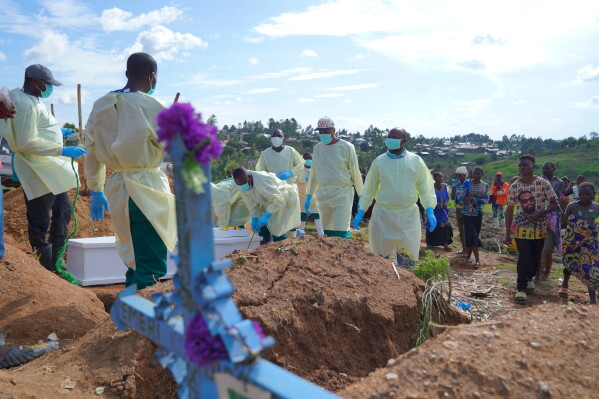
According to the latest figures released Saturday by Congo’s Ministry of Health, at least 5,026 people have died out of 10,351 reported infections, bringing the fatality rate to nearly 50 percent.
The outbreak, which was declared in mid-May and is caused by the Bundibugyo strain of the Ebola virus, has overwhelmed health authorities and intensified fears of a wider public health emergency.
It is now the second deadliest Ebola outbreak in history, surpassed only by the 2014–2016 West African epidemic, which claimed approximately 11,000 lives across several countries.
Dr. Patrick Otim, a programme area manager with the World Health Organization, described the rising death toll as a devastating milestone, emphasizing that the figures represent thousands of families and communities torn apart by the disease.
Despite the mounting fatalities, health officials report that 2,788 patients have recovered. However, the absence of an approved vaccine or specific treatment for the Bundibugyo strain continues to complicate containment efforts, leaving medical teams largely dependent on supportive care and symptom management.
Since the outbreak began, Ebola has spread to 67 of Congo’s 178 health zones across eight of the country’s 26 provinces. Fifty of those affected health zones continue to report active infections.
The eastern provinces of Ituri and North Kivu remain the hardest hit, accounting for a combined 9,782 confirmed cases and 4,792 deaths.
Health authorities are also facing significant challenges in contact tracing, testing, and identifying new transmission chains, raising fears that the outbreak could continue spreading beyond already affected communities.
According to the Africa Centres for Disease Control and Prevention, approximately 80 percent of new infections are being detected among individuals who were not previously identified as contacts of confirmed patients.
The alarming trend suggests that many transmission chains remain undetected, making it increasingly difficult for health workers to identify infected individuals early and interrupt the spread of the virus.
As the crisis deepens, the growing number of infections and fatalities underscores the urgent need for stronger disease surveillance, expanded testing, effective contact tracing, and coordinated public health interventions to bring the outbreak under control.