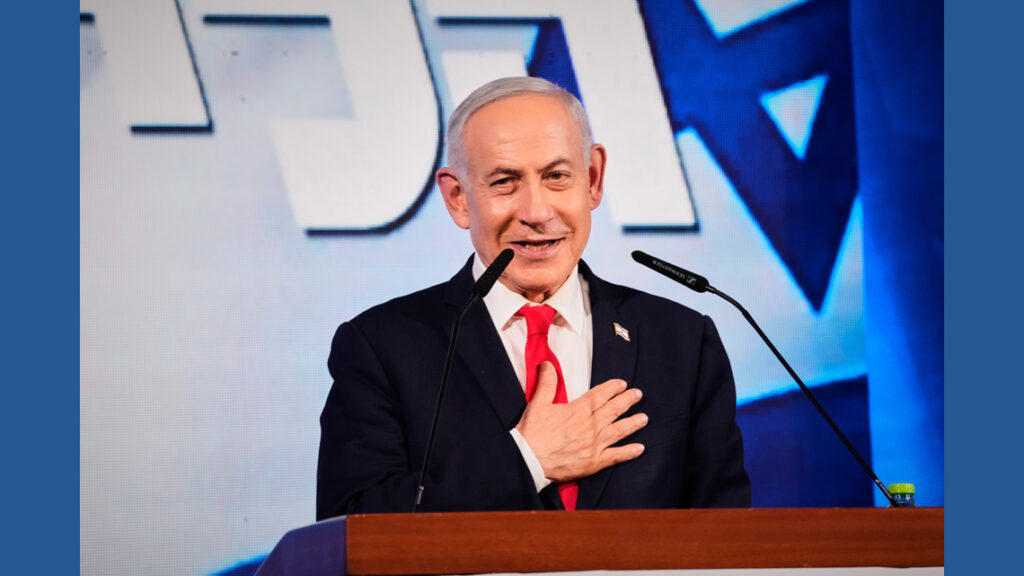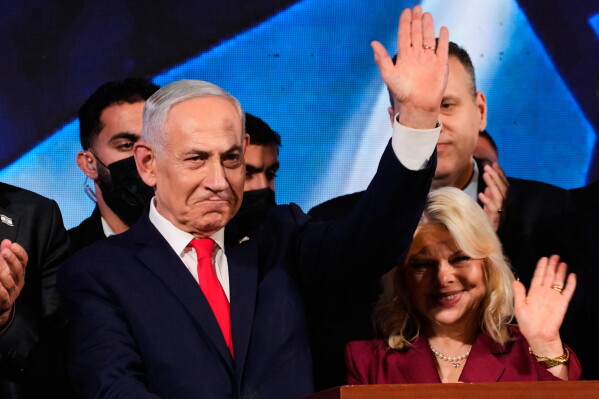
Preliminary results released Wednesday by Israel’s Central Elections Committee indicate that Prime Minister Benjamin Netanyahu’s right-wing alliance is on course to win 53 seats in the 120-member Knesset, while the main opposition bloc led by former military chief Gadi Eisenkot is projected to secure 48 seats.
Both alliances remain short of the 61 seats required to establish a parliamentary majority, raising the prospect of difficult coalition negotiations and a prolonged period of political uncertainty.
According to the Israeli Central Elections Committee, more than five million votes had been counted by 9 p.m. local time Wednesday, representing nearly 90 percent of ballots cast.
The results suggest that Netanyahu’s political alliance is positioned to emerge as the largest bloc in parliament, although its projected 53 seats would leave it eight seats short of a governing majority.
Eisenkot’s opposition alliance, meanwhile, is expected to win 48 seats, placing it 13 seats below the threshold needed to form a government independently.
The figures remain provisional, with the final distribution of parliamentary seats subject to the completion of vote counting.
One of the most significant developments in the election is the projected performance of Israel’s Arab-led political parties.
The Joint List and Ra’am are expected to win a combined 19 seats, potentially marking a historic level of representation in the Knesset.
Their projected gains could make them influential in determining the country’s next government, particularly if neither major political alliance can secure sufficient support from other parties.
However, cooperation with Arab-led parties remains politically contentious.
Netanyahu has strongly opposed forming a government dependent on Arab political factions, while the opposition faces internal disagreements over whether to seek their support.
The projected 19 seats could therefore prove decisive in coalition negotiations, even if the parties do not formally join a governing alliance.
The election results point toward a fragmented parliament in which neither Netanyahu nor Eisenkot can claim an outright victory.
Under Israel’s parliamentary system, the ability to form a government depends on securing the support of at least 61 lawmakers rather than simply winning the largest number of seats.
Netanyahu’s projected lead gives his alliance an advantage in terms of parliamentary representation, but it does not guarantee that he will remain prime minister.
Likewise, Eisenkot’s opposition bloc would need additional support to assemble a viable governing majority.
The political arithmetic could force parties to reconsider existing alliances, negotiate new agreements or explore arrangements involving support from outside a formal coalition.
The closely contested election comes amid deep political divisions in Israel over national security, the war in Gaza, relations with Palestinians and the country’s future leadership.
The projected results suggest that those divisions remain firmly reflected in the electorate, with neither major political camp receiving a decisive mandate.
As the remaining ballots are counted, attention will increasingly turn to whether Netanyahu can attract additional coalition partners or whether opposition leaders can reach an agreement capable of removing him from power.
For now, the election remains unresolved, with the projected 19 seats for Arab-led parties adding another important dimension to the negotiations.
The final results will determine the composition of the next Knesset, but the formation of Israel’s next government could depend on weeks of political bargaining.