The missile launches came just days after Pyongyang threatened to resume propaganda broadcasts along the heavily fortified border and deploy additional weapons systems in response to what it described as repeated provocations by South Korean forces.
The latest military activity has raised fresh concerns about the risk of confrontation on the Korean Peninsula, where relations between the two countries have deteriorated following a series of border incidents.
South Korea’s Joint Chiefs of Staff said it detected approximately 10 short-range ballistic missiles launched from the North Korean coastal city of Wonsan.
According to the military, the missiles traveled approximately 250 kilometers, or 155 miles, before falling into waters east of the Korean Peninsula.
South Korean defense officials said their forces remained on heightened alert and were maintaining close coordination with the United States to respond to any potential North Korean provocation.
Japan’s Defense Ministry also reported detecting a suspected ballistic missile launch by North Korea.
The launches underscore Pyongyang’s continued reliance on missile demonstrations amid growing military and diplomatic tensions with its neighbors.
Relations between North and South Korea have worsened significantly since last month’s land mine explosions near their shared border, which injured three South Korean soldiers.
Seoul accused North Korea of planting explosive devices south of the military demarcation line and demanded an official apology.
Pyongyang denied responsibility for the explosions and warned that it would retaliate if it faced further provocations.
The incident intensified longstanding mistrust between the two countries, whose border remains one of the most heavily militarized in the world.
Last week, North Korea announced plans to resume propaganda loudspeaker broadcasts along the border, a tactic historically used by both countries during periods of heightened confrontation.
Pyongyang also threatened to place additional weapons systems on alert near the frontier.
North Korean officials said the measures were a response to what they described as repeated warning shots fired by South Korean troops in border areas.
South Korea subsequently proposed talks aimed at clarifying the boundary and reducing the risk of accidental military clashes.
However, North Korea has not responded to the proposal.
The lack of communication has increased concerns that misunderstandings or isolated incidents could trigger a wider confrontation.
Thursday’s missile launches also followed North Korean leader Kim Jong Un’s surprise visit to China over the weekend.
During the visit, Kim sought to strengthen cooperation with Beijing, North Korea’s most important diplomatic ally and economic partner.
China has long played a central role in supporting North Korea’s economy and maintaining diplomatic relations with the isolated country.
Kim’s visit came at a time of heightened tensions with South Korea, adding a diplomatic dimension to Pyongyang’s recent military activities.
Signs of increased North Korean military activity have also emerged along the border.
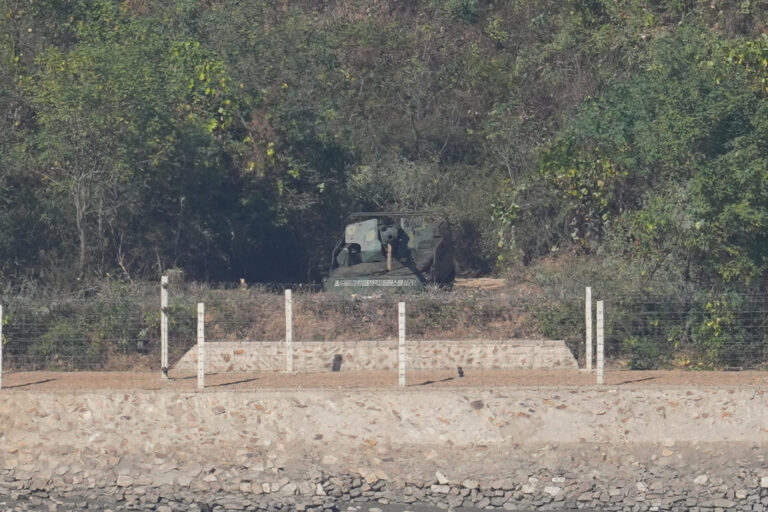
During a visit to a South Korean border town earlier this week, Associated Press journalists observed North Korean artillery guns positioned across the frontier in locations where such weapons had not previously been visible.
The observation suggests a more prominent deployment of military equipment near the border, although the purpose and operational status of the artillery positions were not immediately clear.
The development follows Pyongyang’s warning that it would strengthen its military posture in response to perceived threats from South Korea.
The latest missile launches highlight the increasingly fragile security situation on the Korean Peninsula.
With North Korea threatening additional military measures, South Korea maintaining defensive readiness and diplomatic communication between the rivals limited, concerns are growing over the possibility of further escalation.
Seoul has emphasized its willingness to pursue dialogue to prevent accidental clashes, but Pyongyang’s failure to respond leaves the prospects for de-escalation uncertain.
For now, South Korean and U.S. forces remain on alert as regional governments monitor North Korea’s military activities and assess the implications of its latest missile tests.