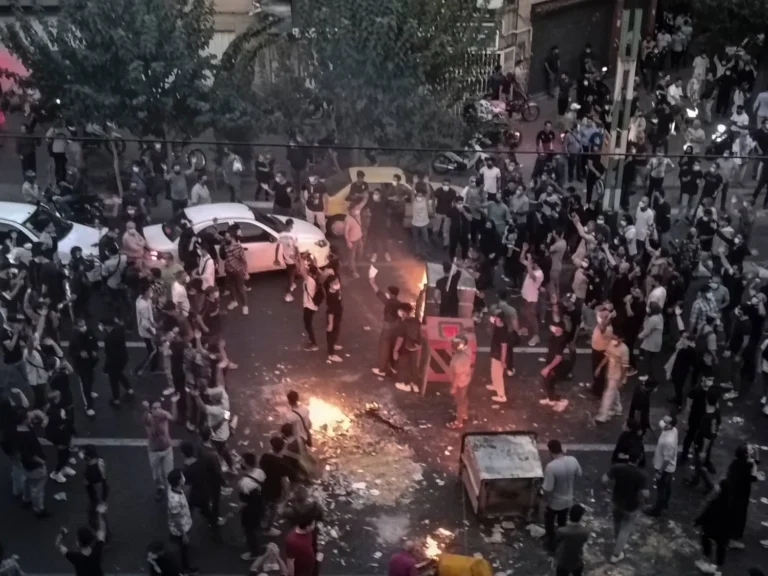
Iran is facing a renewed wave of protests challenging the country’s theocratic leadership, but in recent days public attention has been drawn to events far beyond its borders: the U.S. seizure of Venezuelan President Nicolás Maduro, a longtime ally of Tehran.
Since Maduro was taken into U.S. custody over the weekend, Iranian state media and senior officials have sharply condemned the operation. On the streets — and even in some official circles — the development has sparked unease and speculation about whether a similar operation could one day target Iran’s own leadership, including Supreme Leader Ayatollah Ali Khamenei, who is 86.
The anxiety reflects broader fears within Iran. Many Iranians worry that Israel, a close U.S. ally, could again strike Iranian targets, as it did during the 12-day conflict with Tehran in June. During that fighting, Israel killed several senior Iranian military officials and nuclear scientists, and the United States bombed Iranian nuclear enrichment facilities. Iranian officials believe Khamenei went into hiding during that period for security reasons.
“God bless our leader — we should be careful too,” said Saeed Seyyedi, a 57-year-old teacher in Tehran, who said the events in Venezuela have heightened fears of U.S. action against Iran.
“The U.S. has always been plotting against Iran, especially when issues like oil and Israel are involved,” he said. “It becomes even more complicated when you add the Russia-Ukraine war, Hezbollah, and drug accusations.”
The United States has long accused the Iranian-backed Hezbollah of financing its activities through drug trafficking, including operations in Latin America — allegations the group denies.
In the immediate aftermath of Maduro’s capture, an analyst on Iranian state television claimed, without evidence, that the United States and Israel had previously planned to kidnap Iranian officials using teams of dual nationals. Such claims are uncommon even for Iran’s often conspiratorial state media.
Concerns intensified further on Sunday night when Ayatollah Mohammad Ali Javedan told worshippers during prayers at Tehran University that Khamenei’s life could be in danger.
“Someone said they had a bad dream that the leader’s life is in danger,” Javedan said, without elaborating. “Please pray.”
Analysts caution, however, that Iran differs significantly from Venezuela. Iran is roughly twice the size, has a larger and more capable military, and maintains extensive internal security forces. U.S. planners are also mindful of the legacy of Operation Eagle Claw, the failed American special forces mission to rescue U.S. hostages after the 1979 seizure of the U.S. Embassy in Tehran — a reminder of the risks involved in any such operation.
Even so, the events in Venezuela have amplified existing tensions inside Iran, deepening public anxiety as protests continue and regional instability persists.