At least eight people have been killed after devastating floods swept through mountainous areas of Nepal near the border with China, destroying homes, vehicles and critical infrastructure, authorities said.
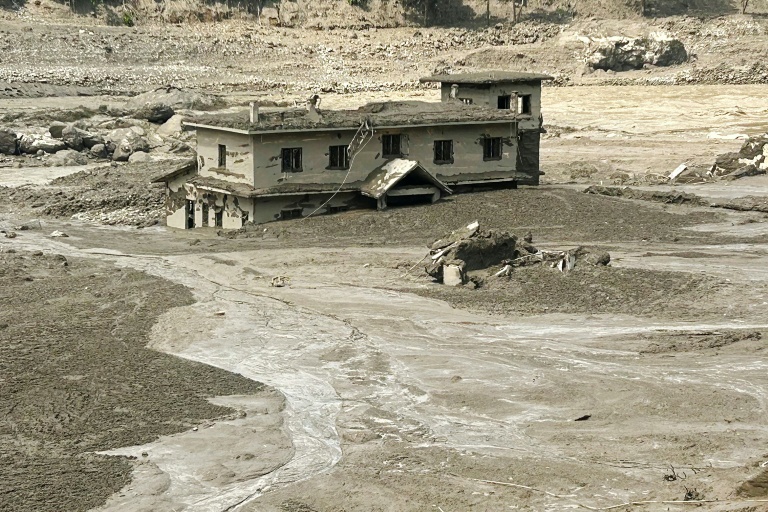
Images released by Nepali police showed powerful torrents of muddy water surging through river valleys and sweeping away buildings. Other images showed homes partially buried by mud and debris.
“So far, eight bodies have been found. Rescue operations are underway,” Nepal police spokesperson Abi Narayan Kafle said.
Suman Chalise, a 34-year-old teacher in Nuwakot district, said he witnessed floodwaters carrying away several trucks, houses and people.
“It was absolutely heart-wrenching. I had not witnessed such devastation before,” Chalise said.
Authorities said the full extent of the destruction was still being assessed. Residents living near rivers have been urged to evacuate to safer areas as concerns grow about additional flooding and landslides.
The Nepal Army has deployed helicopters and emergency response teams to assist with search-and-rescue operations.
The disaster has also severely affected the country’s energy infrastructure. The Nepal Electricity Authority said about 430 megawatts of generating capacity, including hydropower and solar facilities, had been damaged, disrupting electricity supplies.
Preliminary analysis by the Kathmandu-based International Centre for Integrated Mountain Development suggested the flooding may have been triggered by a rock-and-ice avalanche in Nepal that blocked the Lhende River before causing a cascading flood.
Several highways have also been closed because of damage and the continuing risk of mudslides.
Across the border, Chinese authorities reported that the disaster had affected the Gyirong Port area in Tibet. Chinese President Xi Jinping called for an all-out search-and-rescue operation and urged authorities to prioritize finding missing people and treating the injured.
Officials in Tibet also warned that roads around the affected region remained vulnerable to mudslides and unsafe for travel.
Experts have cautioned that another flood could occur because a blockage reportedly remains upstream along the Nepal-China border river.
Nepal and other parts of South Asia frequently experience deadly floods and landslides during the June-to-September monsoon season. Scientists have warned that climate change is increasing the risks associated with extreme weather events across the region.