Ten years after the United Kingdom voted to leave the European Union, the political shockwaves of Brexit continue to shape British politics, contributing to a period of instability that has seen the country cycle through multiple prime ministers and struggle with persistent economic and governance challenges.
On June 23, 2016, British voters narrowly backed leaving the European Union by a margin of 52% to 48%, ending more than four decades of membership in the bloc. The result triggered the resignation of then-Prime Minister David Cameron, who had called the referendum but campaigned for Britain to remain in the EU.
Since then, Britain has been led by a succession of prime ministers, each facing the political and economic consequences of Brexit.
The latest leader to depart is Prime Minister Keir Starmer, who announced on Monday that he would step down after two years in office. His tenure was marked by sluggish economic growth, public dissatisfaction with government performance and divisions within the political landscape.
Analysts say many of those challenges can be traced, at least in part, to the aftermath of Brexit.
Although the issue no longer dominates daily headlines, experts argue that its influence remains deeply embedded in British politics.
Chris Grey, an academic who has extensively studied Britain’s departure from the EU, described Brexit’s continuing impact as a “subterranean trace” running through the country’s increasingly fragmented political environment.
A Vote That Reshaped British Politics
Supporters of Brexit argued that leaving the European Union would allow Britain to regain control over its laws, borders and economy.
The “Leave” campaign tapped into public frustration over immigration, sovereignty and perceptions that decisions affecting Britain were being made in Brussels rather than London.
By contrast, supporters of remaining in the EU largely focused on warnings about the economic risks associated with leaving the bloc.
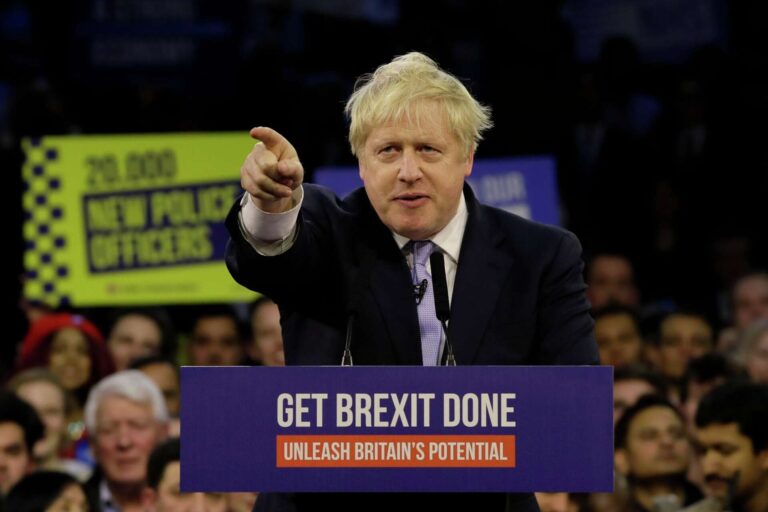
One of the most prominent voices in the Brexit campaign was former Prime Minister Boris Johnson, who became a leading advocate for departure.
“We can see the sunlit meadows beyond,” Johnson said during the campaign. “I believe we would be mad not to take this once-in-a-lifetime chance to walk through that door.”
Brexit’s Enduring Impact
A decade later, debates continue over whether Brexit has delivered on its promises.
Supporters maintain that leaving the EU restored national sovereignty and greater control over domestic policy. Critics argue that the move contributed to economic uncertainty, trade disruptions and political instability.
Regardless of differing views, Brexit remains one of the most consequential political decisions in modern British history, reshaping the country’s relationship with Europe and leaving a lasting imprint on its political system.
As Britain prepares for another change in leadership, the legacy of the 2016 referendum continues to influence debates over the nation’s future direction.