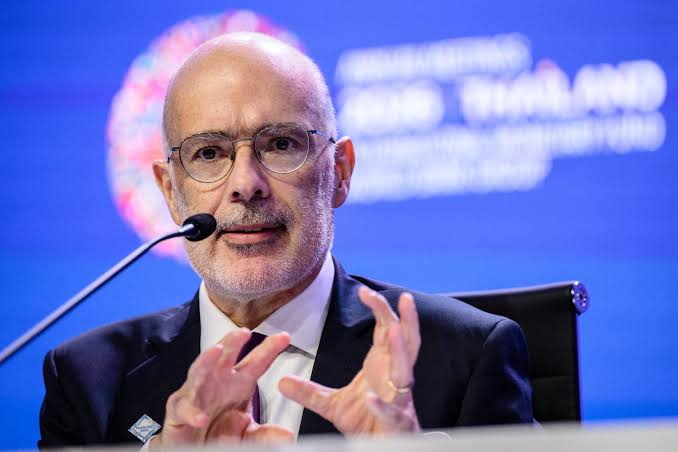
President-elect of Rotary International, Olayinka Babalola, has restated the organisation’s commitment to eradicating polio globally, despite rising financial constraints affecting international health programmes.
Speaking ahead of his inauguration, Babalola said Rotary would remain firmly dedicated to its decades-long campaign against the disease until it is completely eliminated.
“We must keep our most important commitment, we will eradicate polio,” he said.
He highlighted recent advances in immunisation efforts, noting that health workers in Afghanistan are now deploying needle-free jet injectors to vaccinate children in communities previously resistant to immunisation campaigns.
“In Afghanistan, medical workers are now using needle-free jet injectors to vaccinate children in communities where fear and distrust once kept families away, and it is working. Innovation is helping us reach the unreachable,” he said.
While commending such progress, Babalola warned that global health financing is under increasing strain, stressing that this was not the time for reduced commitment.
“But we cannot rest now. Funding is under pressure globally. This is precisely the moment Rotary must hold firm. Every child protected is one step closer to a promise kept to every family in the world that will never have to know this disease.”
He added that Rotary’s mission now goes beyond project implementation to delivering measurable and sustainable impact in communities worldwide.
According to him, the organisation’s renewed focus is on long-term transformation rather than simply tracking activities and interventions.
“In Rotary, we give members a place to belong. We help keep students in school. We organise vaccination campaigns that protect children. These results are real, and they matter deeply. But to create lasting impact asks a harder question: What happens next?” he said.
Babalola explained that sustainable impact involves not only delivering programmes but also ensuring that positive outcomes endure over time.
“We turn friendships into lifelong bonds. We help each other change for the better. And we measure not just what we did but what changed and whether that change will endure.”
He also referenced Rotary’s Pathways to Peace and Prosperity initiative in Colombia, which supports communities affected by armed conflict, poverty and displacement through leadership training, conflict resolution, and economic empowerment programmes.
Babalola reaffirmed that Rotary would continue pursuing initiatives aimed at creating lasting benefits while advancing its broader goal of promoting healthier, more peaceful and prosperous communities globally.