The United States and its allies have concluded the largest-ever edition of the Rim of the Pacific (RIMPAC) exercise, underscoring growing military cooperation as regional security concerns intensify over China’s expanding military presence and North Korea’s advancing nuclear program.
The five-week exercise, which ended Friday, brought together forces from 30 nations and approximately 30,000 military personnel, according to a report by The Wall Street Journal.
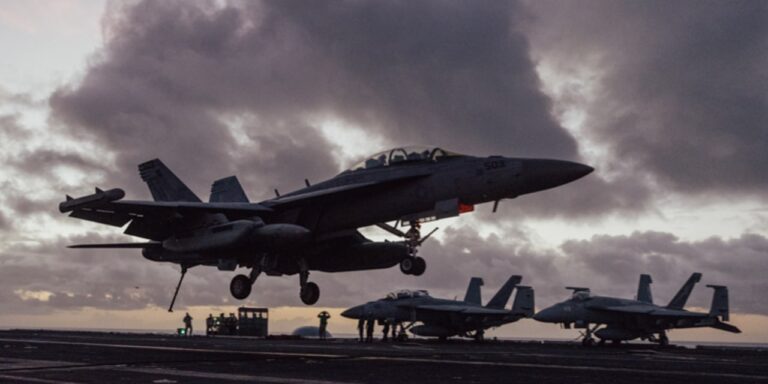
Participants carried out more than 500 maritime operations and approximately 2,400 air missions during the multinational drills, testing interoperability across a broad range of military capabilities.
The exercise featured a diverse fleet of naval assets, including the U.S. aircraft carrier USS Theodore Roosevelt, a Japanese Aegis-equipped destroyer, South Korean warships and a Canadian submarine.
Military forces also evaluated weapons systems, logistics networks, unmanned platforms and command-and-control procedures designed to improve coordination during joint operations.
Reflecting the growing role of U.S. allies in regional security, partner nations assumed several senior leadership positions during the exercise, with Americans occupying only three of RIMPAC’s highest-ranking command roles.
The expanded drills come as China continues to adopt a more assertive military posture across the Indo-Pacific while North Korea presses ahead with the development of its nuclear and missile capabilities.
The U.S. Indo-Pacific Command conducts more than 100 multinational exercises annually with regional partners. Other major exercises—including Talisman Sabre in Australia, Cobra Gold in Thailand and Balikatan in the Philippines—have also grown in size and complexity in recent years.
The Philippines participated in RIMPAC with its coast guard for the first time, reflecting Manila’s efforts to strengthen maritime capabilities amid ongoing territorial disputes with China in the South China Sea.
Despite the scale of the exercise, military officials acknowledged that significant challenges remain in coordinating regional defense efforts.
Unlike NATO, the Indo-Pacific lacks a unified military alliance, leaving participating countries to operate with different communications systems, radar networks, logistics frameworks and medical support structures.
Questions over long-term U.S. commitment to regional security also lingered in the background following President Donald Trump’s repeated calls for allies to increase defense spending and his criticism of existing alliance arrangements.
At the same time, Washington has shifted some military personnel and equipment from the Indo-Pacific to support operations in Europe and the Middle East.
In response to evolving security threats, several U.S. allies have increased defense budgets and accelerated purchases of naval vessels, missile systems, radar technology and military communications equipment—moves expected to benefit major defense manufacturers in the United States and allied countries.