For nearly three decades, a defining slogan of Venezuela’s ruling socialist movement has been: “United, we will win!”
The phrase has long symbolized the cohesion of the political project launched by Hugo Chávez, uniting government officials, military leaders, party activists and supporters behind a common vision and a shared opposition to U.S. influence. Whether at state events, political rallies or televised broadcasts, the message has served as a rallying cry for loyalty and unity.
However, signs of growing internal discord have emerged in the months following the U.S. operation that led to the capture of then-President Nicolás Maduro in January.
Longtime supporters of the governing movement have increasingly voiced criticism of the administration led by acting President Delcy Rodríguez, with some openly speculating that internal betrayal may have played a role in Maduro’s removal from power.
Since taking office, Rodríguez has pursued a series of policy shifts that mark a departure from some of Chávez’s signature positions. Her government has cooperated with several U.S. demands, reorganized key ministries, advanced legislation to restructure the country’s oil sector, and released a number of political prisoners.
Those moves have drawn criticism from factions within the ruling movement, many of whom remain deeply skeptical of closer ties with Washington. For decades, Chavismo has viewed the United States as its principal geopolitical adversary, regardless of which party controlled the White House.
Tensions intensified following the May deportation of former minister Alex Saab to face criminal investigations in the United States and Rodríguez’s authorization of a U.S. military training exercise in Caracas.
Among the most vocal critics has been Mario Silva, a longtime pro-government broadcaster who spent years defending the administration on state television before being removed from the air following Maduro’s capture.
Silva questioned the legality of Saab’s deportation, arguing that it violated constitutional protections. He also suggested that Rodríguez’s administration was not operating independently.
According to Silva, some key decisions are being influenced by officials at the U.S. Embassy, a development he warned could undermine Venezuela’s sovereignty.
“The imperialists don’t negotiate. They conquer, test and probe — until our country shatters,” Silva said during a livestream broadcast. “Nobody is safe right now. And that is a concrete, terribly dangerous fact.”
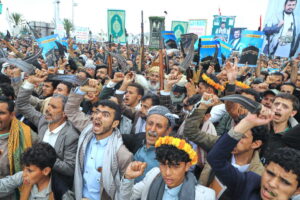
Public opposition to the government’s new direction has also begun to emerge. On May 23, several dozen demonstrators gathered in Caracas to protest the military exercise that included the landing of two U.S. Marine Corps Osprey aircraft at the U.S. Embassy.
The protesters carried a Venezuelan flag bearing the message, “No to the Yankee drill.”
While the demonstration was relatively small, its significance lay in its symbolism. In a capital accustomed to mass political rallies drawing thousands of participants, the protest reflected both growing unease within segments of the ruling movement and the challenges facing a government attempting to navigate a new political reality.