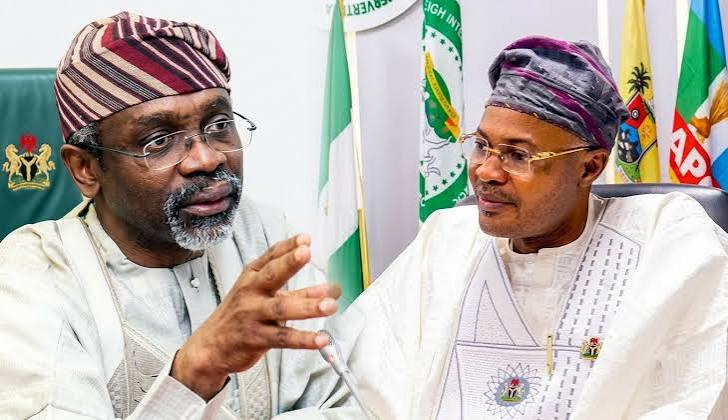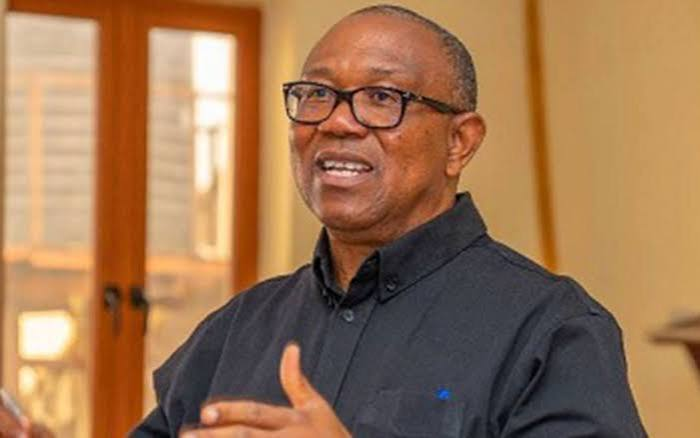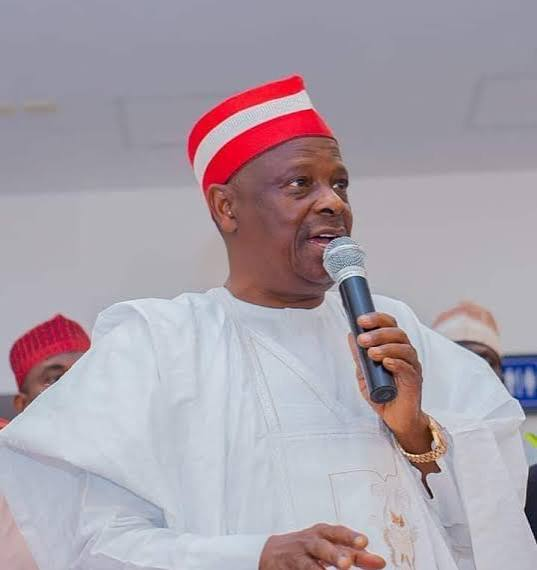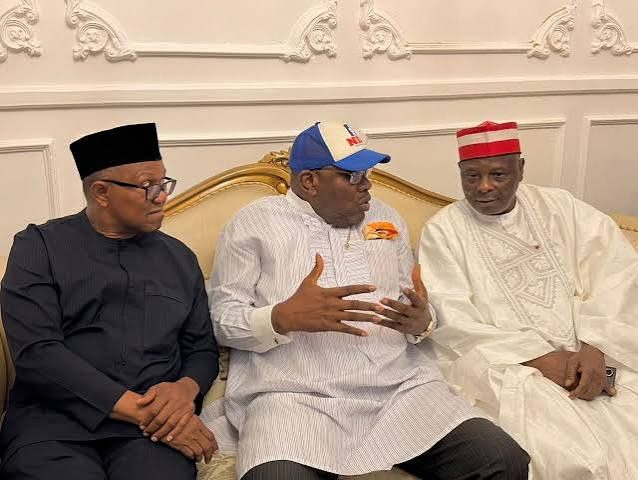
Former Kano State Governor and Nigeria Democratic Congress (NDC) vice-presidential candidate, Senator Rabiu Kwankwaso, has revealed that he and the party’s presidential candidate, Peter Obi, have signed a formal agreement to serve only one four-year term if elected in 2027, after which power would return to the North in 2031.
Speaking on Channels Television’s Politics Today, Kwankwaso said the agreement followed extensive consultations between both leaders and their political platforms and was documented to reinforce mutual trust and commitment.
According to him, the arrangement is based on the principles of equity, fairness and national unity, with the presidency remaining in the South for a single term before rotating back to the North.
“I personally believe him, and I don’t think, based on what I now know about him, he will change his mind when the time comes.
“We have accepted to put it on paper. We have done one for the party, and we have done another one between the two of us,” Kwankwaso said.
He explained that the understanding provides for a united administration between 2027 and 2031, after which leadership would shift to the North.
“After four years, we will continue to work together as a group, as a party, as friends and brothers, and after our four-year term, from 2027 to 2031, power returns to the North. That is the general agreement,” he stated.
Kwankwaso also disclosed that before the 2023 general election, representatives of the Labour Party (LP) and the New Nigeria Peoples Party (NNPP) established a joint committee to compare their manifestos and assess the possibility of political cooperation.
According to him, the committee concluded that both camps shared similar policy objectives and recommended closer collaboration after the election.
“The committee looked at our blueprints and the political situation in the country. At the end of the day, we all accepted that there was a need to work together as people of like minds, who are committed to bringing positive change to Nigeria,” he said.
The former Kano governor said his interactions with Obi had strengthened his confidence in the former Anambra State governor, describing him as a principled politician committed to Nigeria’s development.
“I now know that Peter Obi is a very serious politician. He has the country in mind. He is somebody one can rely on. When we compared our blueprints, we realised that with only a few adjustments, we shared virtually the same vision and mission for the country,” he added.
Kwankwaso said an Obi-Kwankwaso administration would focus on addressing insecurity, reviving the economy, rebuilding infrastructure and improving education.
He described insecurity as the country’s most pressing challenge, noting that violence has spread beyond the North-East to the North-West, North-Central and parts of southern Nigeria.
“Our first priority is insecurity. We also have to address the economy, infrastructure and education because no country can develop without providing quality education for its citizens,” he said.
On tackling insecurity, Kwankwaso stressed that success would require strong political will, improved intelligence gathering, better welfare for security personnel and greater cooperation from the public.
“The first thing is political will. Once that is established, and you know what to do, you can mobilise the military and the public effectively.
“Communities know those behind these crimes, but many are afraid to volunteer information because of past experiences. We will restore their confidence,” he said.
He also maintained that dialogue should complement military operations where necessary.
“Of course, we will talk. We will sit down with them. We will talk to everybody. Where military action is required, we will also not hesitate to deploy the security agencies,” he said.
Without directly criticising President Bola Tinubu’s administration, Kwankwaso argued that Nigeria’s security challenges require firmer leadership.
“The Nigerian military is capable, well-trained locally and internationally. I see no reason why they should not be properly equipped with the necessary resources to defeat terrorists and other criminal elements. What is needed is strong political will and the right directives,” he added.