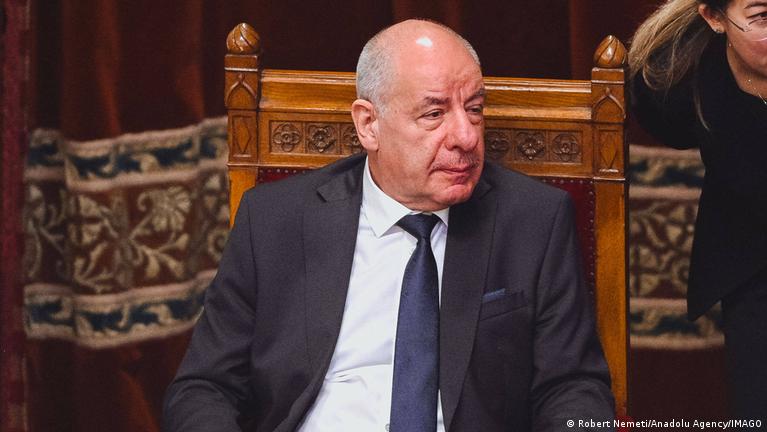
Hungarian President Tamás Sulyok has signed a constitutional amendment bringing his presidency to an immediate end, paving the way for a new head of state following the country’s recent political transition.
Prime Minister Péter Magyar later confirmed that Sulyok had signed the legislation, which was approved by Parliament earlier this week.
In a statement on Saturday, Sulyok said he was fulfilling his constitutional duty after carefully considering both the legal and moral implications of the decision.
“I am fulfilling my obligation under the Fundamental Law after carefully weighing my legal options and my conscience,” he said.
The amendment, passed on Monday by Magyar’s governing Tisza Party, forms part of the new administration’s broader effort to dismantle the remaining institutional influence of former Prime Minister Viktor Orbán and his Fidesz party following their defeat in April’s general election.
Sulyok, a longtime ally of Orbán, had previously resisted repeated calls from the new government to resign, arguing that he should complete his constitutional mandate despite accusations that he had obstructed key reforms.
Although he signed the amendment, Sulyok criticized the legislation, warning that it establishes what he described as a dangerous constitutional precedent.
He argued that the measure undermines democratic principles, including the separation of powers and the rule of law—issues that have long been at the center of disputes between Hungary and the European Union during Orbán’s years in office.
Magyar’s center-right Tisza Party secured a two-thirds parliamentary majority in April after campaigning on promises to deliver sweeping political reforms and what it described as “regime change” following 16 years of Fidesz rule.
Under the constitutional amendment, Sulyok’s presidency will officially conclude at midnight on Sunday.
Parliament Speaker Agnes Forsthoffer will serve as acting president until lawmakers elect a new head of state, a vote expected to take place within the next 30 days.
The constitutional reforms also introduce a 12-year term limit for members of Parliament and require Constitutional Court judges to retire at the age of 70.
The retirement provision will force the departure of Orbán ally Peter Polt as president of the Constitutional Court.
Reacting to the changes, Sulyok accused Magyar’s government of undermining the core values of a free society, while Orbán argued that Hungary now faced what he described as a new form of political “tyranny.”
Magyar, however, welcomed Sulyok’s departure, saying it removed the final obstacle preventing his government’s reforms from taking effect.
“With these decisions,” Magyar said, “we are restoring something that the Orbán regime tried for many years to take away—the certainty that power can be limited, that public assets can be recovered, and that the state can once again serve its citizens.”
While allegations of corruption were widespread during Orbán’s years in power, some rights organizations have expressed concern over the new legislation.
Human Rights Watch warned that aspects of the constitutional amendment bear similarities to governance practices associated with the previous Fidesz administration, raising fresh questions about Hungary’s democratic trajectory despite the change in government.