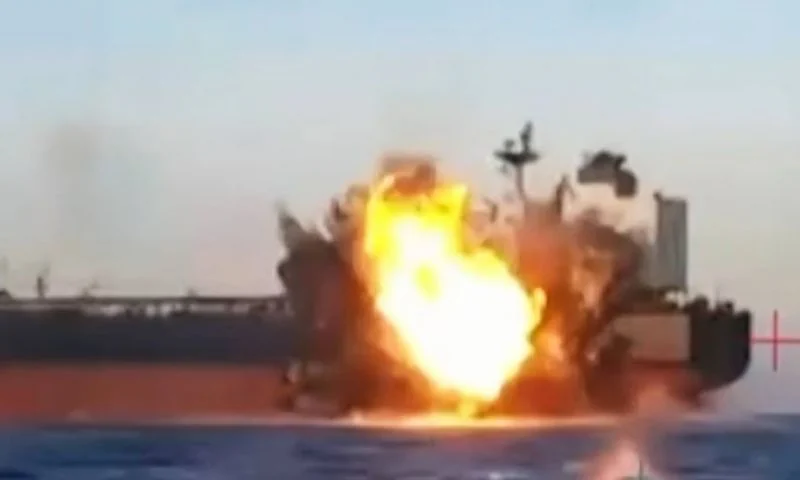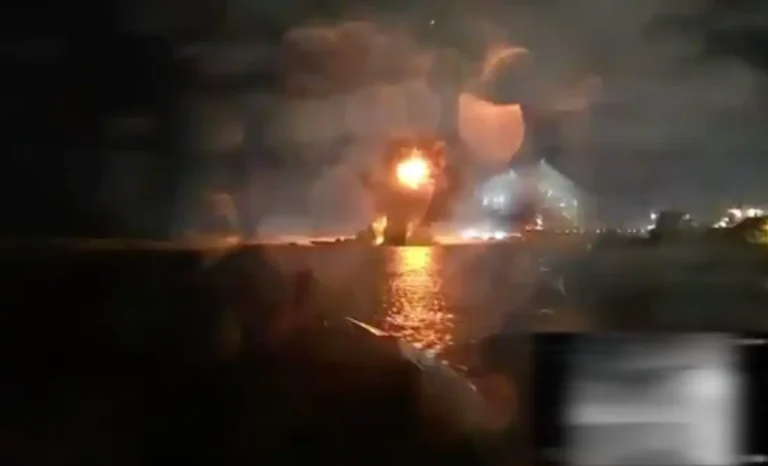
The operation, conducted on Sunday, November 22, targeted the Russian corvette Merkury while it was docked at the port of Benghazi in eastern Libya.
In a statement released Monday, Zelenskyy described the mission as an exemplary Ukrainian military operation, confirming that seven domestically manufactured naval drones were deployed to destroy the Russian vessel.
The Ukrainian president said the attack successfully overcame Russian defensive measures, resulting in the sinking of the warship, which had entered service in 2023.
Zelenskyy also confirmed that a Russian Ka-27 military helicopter was destroyed during the operation.
In addition to the warship, Ukrainian forces struck the Russian dry cargo vessel MV Angara, which Kyiv claims had been used to transport weapons and military equipment supporting Russia’s ongoing war against Ukraine.
Zelenskyy said the operation achieved its intended objectives, adding that he had received detailed military briefings before and after the strikes.
The Ukrainian leader emphasized that Kyiv would continue developing its domestic weapons capabilities and conducting operations against Russian military assets in response to Moscow’s invasion.
Ukraine’s Security Service, known as the SBU, released video footage showing naval drones approaching and striking the targeted Russian vessels.
The agency confirmed that it coordinated the mission with the Ukrainian military.
According to the SBU, the operation involved seven Ukrainian-made unmanned surface vessels that were transported to the designated operational area aboard a larger vessel, commonly referred to as a mother ship.
The drones were subsequently launched toward their targets in a coordinated attack.
Ukrainian security officials defended the operation, arguing that both Russian vessels were legitimate military targets because of their alleged roles in supporting Moscow’s military operations.
Authorities in eastern Libya confirmed that a Russian naval vessel had been struck while docked at the Benghazi naval base.
The attack triggered explosions and extensive damage, with satellite imagery subsequently showing the Russian corvette capsized at the port.
Libyan officials said the warship had stopped in Benghazi for refueling and resupply under existing cooperation arrangements with Russia.
The incident has also raised concerns about Libya’s sovereignty and the potential consequences of foreign military operations taking place within its territory.
The sinking of the Merkury represents a significant development in Ukraine’s campaign against Russian naval assets.
Since Russia launched its full-scale invasion in February 2022, Ukrainian forces have repeatedly targeted Russian warships, military installations and supply networks, particularly in the Black Sea.
However, the latest attack demonstrates Kyiv’s ability to conduct operations much farther from its own coastline, extending its reach into the Mediterranean region.
The incident also comes amid intensified Ukrainian attacks on Russian military and logistical infrastructure, including recent strikes against the Crimean Bridge and other strategic assets.
Military analysts say the attack could have wider implications for Russia’s naval activities and its ability to protect military-linked vessels operating outside the Black Sea.
The destruction of a recently commissioned corvette represents a potentially significant material and operational loss for Moscow.
Ukraine’s decision to target vessels in Libya also signals its determination to disrupt Russian military supply routes wherever they operate.
For Kyiv, the successful operation provides another demonstration of the growing capabilities of its domestically developed naval drone technology.
As the conflict approaches its fifth year, the attack underscores how the Russia-Ukraine war is increasingly affecting military operations and security interests beyond the countries’ immediate borders.
The full extent of the damage to the MV Angara has not yet been independently established, but the confirmed sinking of the Merkury marks another notable setback for Russia’s naval forces.