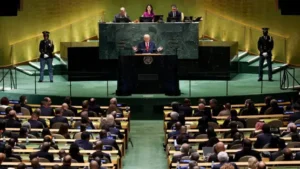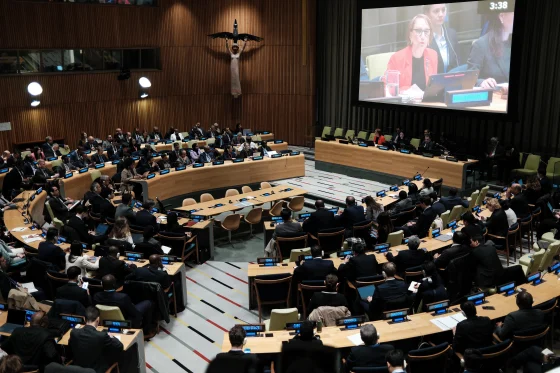
Four candidates seeking to lead the United Nations underwent extensive questioning this week, outlining their visions on global challenges ranging from conflict resolution to poverty reduction in what officials described as one of the most demanding selection processes in international diplomacy.
The sessions, overseen by General Assembly President Annalena Baerbock, are part of the process to choose a successor to Antonio Guterres, whose term ends on January 1.
“The secretary-general is not only the head of the U.N. and the world’s top diplomat,” Baerbock said, “but also represents all of humanity in defending the U.N. Charter and advancing peace, development, and human rights.”
All four candidates emphasized those core pillars, acknowledging the organization’s struggles to address conflicts in regions such as Iran, Gaza, Ukraine, and Sudan amid deep geopolitical divisions. Each pledged to pursue reforms to strengthen the more than 80-year-old institution.
Among the contenders, Michelle Bachelet, a former Chilean president and U.N. human rights chief, stressed the need for proactive diplomacy and stronger engagement on the ground.
“We must anticipate crises, prevent them, and bring nations together,” she said, highlighting the importance of direct leadership in conflict zones.
Rafael Grossi, head of the International Atomic Energy Agency, pointed to growing skepticism about the U.N.’s effectiveness, warning that global polarization has raised serious doubts about the institution’s ability to resolve major international challenges.
Additional candidates are expected to enter the race in the coming weeks as the selection process continues.