Visitors to a U.S. military cemetery in the southern Netherlands have voiced growing concerns after two exhibits recognizing Black American troops who helped liberate Europe during World War II were removed from public view.
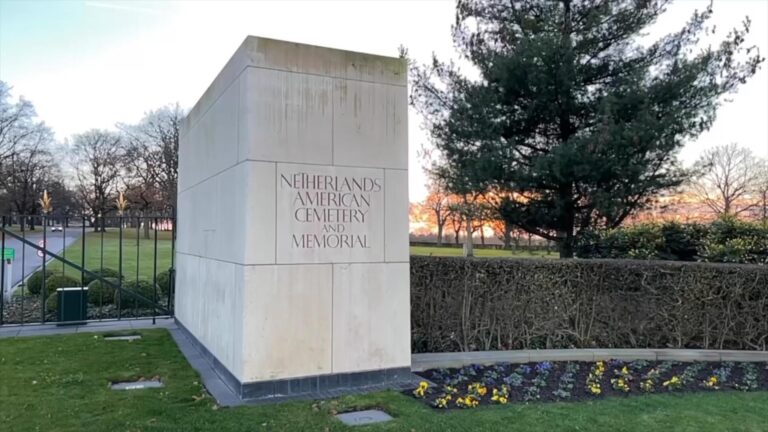
The displays were taken down earlier this spring from the visitor center at the American Cemetery in Margraten, where roughly 8,300 U.S. service members are buried in rolling countryside near the borders of Belgium and Germany. The cemetery is overseen by the American Battle Monuments Commission, the U.S. government body responsible for American military memorials overseas.
The removal followed a series of executive orders issued by President Donald Trump aimed at ending federal diversity, equity, and inclusion programs. “Our country will be woke no longer,” Trump said during a March address to Congress.
The commission did not publicly explain why the panels were removed, a lack of transparency that has drawn criticism from Dutch officials, relatives of American soldiers, and local residents. For decades, people in nearby communities have voluntarily tended the graves of fallen U.S. troops as a gesture of gratitude for their role in liberating the region from Nazi occupation.
Since the displays were taken down, visitors have filled the cemetery’s guestbook with written objections, calling for the recognition of Black soldiers’ contributions to be restored.
U.S. Ambassador to the Netherlands Joe Popolo appeared to defend the decision in a social media post after visiting the cemetery amid the controversy. He wrote that the signs at Margraten were “not intended to promote an agenda that criticizes America.” Popolo later declined requests for further comment.
The episode has reignited debate in Europe over how American history—particularly the contributions of marginalized groups—is presented at U.S.-run memorial sites abroad, and whether recent policy shifts in Washington are reshaping those narratives.