MTN Nigeria and Airtel Nigeria are expected to be the first two telecom operators to install the Fifth Generation, 5G network in Nigeria by January 2022, according to reports.
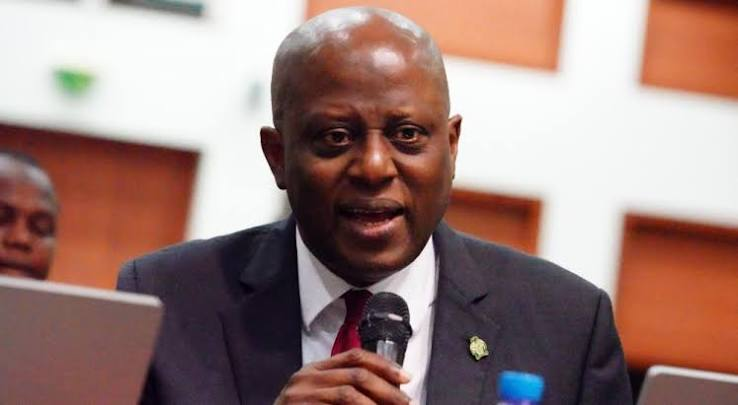
Prof. Umar Dambatta, Executive Vice Chairman of the Nigerian Communications Commission, NCC, revealed this yesterday at the Nigeria e-Government Summit in Lagos, where he elaborated on the 5G Roadmap.
During his keynote address at the forum, Danbatta stated that the commission had allowed Airtel the opportunity to demonstrate its own 5G services to see how efficient they could be.
Remember that MTN was given the same chance, and the trial took place in 2019. The NCC is also conducting another non-commercial trial with Airtel, according to Danbatta.
“Recently, we approved MTN Communications PLC’s Proof-of-Concept (PoC) and Non-Commercial 5G experiments in the 3.5 and 26GHz bands, and now we’re in the process of another non-commercial trial with Airtel,” he said.
Airtel has also confirmed the news, claiming that the trial should have taken place in September.
“It’s true, we’re about to start a 5G non-commercial trial across the country,” a reputable Airtel insider said, declining to be named. The trials were supposed to start in September, but they will start very soon,” he continued.
Dambatta also noted that only MTN and Airtel have completed spectrum band acquisitions since his commission established the Spectrum Trading Guidelines, which allow operators to transfer, lease, or share spectrum resources.
“We successfully traded two spectrum bands, 2 x 10MHz in the 900MHz Extended GSM Band from Intercellular to Airtel and 2 x 10MHz in the 800MHz band from Intercellular to MTN,” he said.
Although the NCC did not specify when the 5G network will go live in the country because the license auction has yet to take place, and that deployment will begin in January 2022.
“Following the Presidential approval of the 5G Policy, we have developed a 5G deployment plan for Nigeria’s Digital economy, and we have set up a committee to auction the 3.5 GHz band for 5G deployment in Nigeria,” Danbata said at the summit, represented by Executive Commissioner, Stakeholders Management, Barr Adewolu Adeleke. The auction’s details will be released in due time.
”The Commission is now upgrading the National Frequency Allocation Table, NFAT, to incorporate WRC-19 recommendations for more efficient spectrum allocation and utilization. We’re also allowing new spectrum bands, such as the 60GHz V-band and the 70/80GHz E-band, to be used for point-to-point and point-to-multipoint deployments.
“We’re working with the National Frequency Management Council (NFMC) and the National Broadcasting Commission (NBC) to guarantee that the 700MHz and 2.6GHz bands are fully free of encumbrances so that they can be assigned to operators for broadband installations.
“We recently approved MTN Communications PLC’s Proof-of-Concept (PoC) and Non-Commercial 5G testing in the 3.5 and 26GHz bands. We’re also conducting another trial with Airtel.
“Since then, we’ve released the Spectrum Trading Guidelines, which allow operators to lease, share, or transfer spectrum resources. There has been a successful swap of two Spectrum bands. Intercellular has transferred 2 x 10MHz in the 900MHz Extended GSM Spectrum to Airtel, while Intercellular has transferred 2 x 10MHz in the 800MHz band to MTN.
“We recently finished developing TV White Space (TVWS) Guidelines for the deployment of broadband services throughout the country.
“Within the Technical Standards and Network Integrity Department, we have established a Satellite Unit to regulate the activities of Satellite Operators in Nigeria (including Space Station Operators and Earth Station Operators)”.
These advances, he added, are aimed at ensuring access to effective and inexpensive network infrastructure to support e-Government and other Digital Economy projects across Nigeria, among other things.
Ada Peter