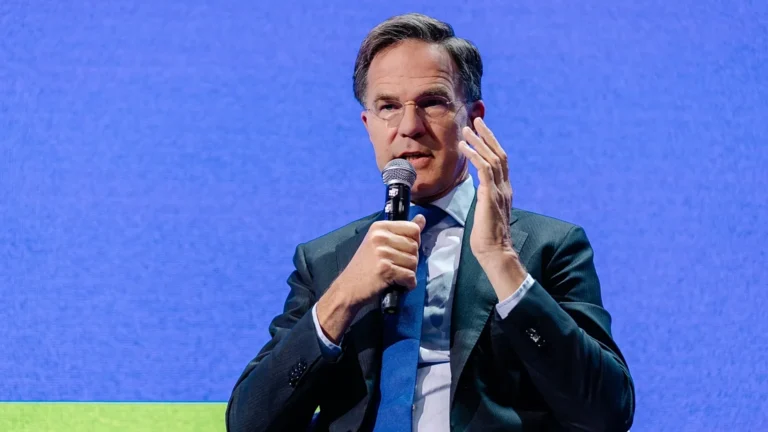
NATO Secretary-General Mark Rutte has urged Russia to stop issuing nuclear threats after Moscow warned that it could use nuclear weapons if the alliance attempted to isolate or attack the Russian exclave of Kaliningrad.
Speaking at the Euronews Defence and Space Summit in Brussels on Wednesday, Rutte stressed that NATO is a defensive alliance and said Moscow’s nuclear rhetoric was unnecessary and unhelpful.
“We are a defensive alliance. Stop the nuclear threats,” Rutte said.
Despite the escalating rhetoric, Rutte said NATO does not currently see an imminent threat to alliance territory and reaffirmed its commitment to collective defense.
“We will defend every inch of NATO territory,” he said, adding that NATO was prepared to respond if circumstances changed.
His comments followed a Russian diplomatic communication reviewed by Reuters in which Moscow warned that it could resort to nuclear weapons if NATO attempted to isolate Kaliningrad. Russia also warned that in the event of a conflict, it could strike decision-making centers in NATO member states.
Kaliningrad, a heavily militarized Russian exclave on the Baltic Sea, is located between NATO members Poland and Lithuania and is geographically separated from mainland Russia.
Rutte declined to confirm the details of Moscow’s communication but said NATO had responded calmly while making clear that it would defend its members.
The nuclear issue also exposed differing views among European officials attending the summit.
Bulgarian Prime Minister Rumen Radev urged European governments to maintain diplomatic channels with Moscow, arguing that policymakers must consider the risk of nuclear escalation when determining their approach to the war in Ukraine.
Radev rejected Russia’s nuclear rhetoric but said European governments should not ignore Moscow’s nuclear capabilities or the potential consequences of further escalation.
European Commissioner for Defence Andrius Kubilius took a different position, arguing that renewed diplomatic engagement under current conditions could undermine Ukraine. He said Russia’s stated negotiating position effectively demands Ukrainian surrender and called for stronger European responses to Russian actions.
The summit also highlighted disagreements over Europe’s defense procurement strategy.
Rutte cautioned against focusing too heavily on requirements to purchase European-made weapons, arguing that Europe’s defense industry currently lacks sufficient production capacity to meet the continent’s security needs.
U.S. Ambassador to the European Union Andrew Puzder also criticized efforts to prioritize European defense manufacturers, arguing that military capability and availability should take precedence over where weapons are produced.
The discussions come amid heightened tensions between Russia and NATO over the war in Ukraine, security in the Baltic region and accusations of Russian hybrid operations across Europe — allegations Moscow has denied.
Russia’s warning and Rutte’s response were also independently reported by Reuters.