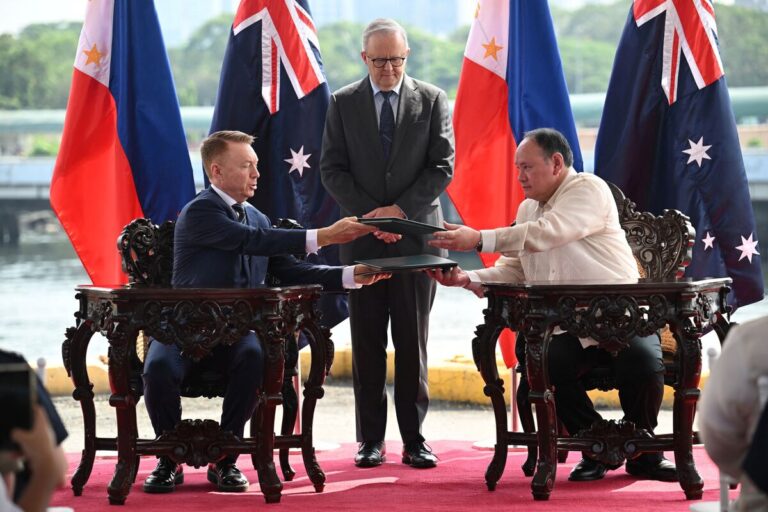
The agreement, signed Sunday, November 15, in Manila, is designed to eliminate bureaucratic obstacles that have slowed military coordination between the two countries, allowing their armed forces to respond more efficiently to emerging security challenges.
Philippine Defense Secretary Gilberto Teodoro said the arrangement would simplify procedures under the existing Status of Visiting Forces Agreement, known as SOVFA, which governs military cooperation and the presence of visiting troops from both nations.
Teodoro described the new agreement as an important step toward reducing administrative delays, explaining that processes previously requiring numerous approvals would now be completed through a much simpler system.
He characterized the initiative as an anti-bureaucracy measure that would significantly improve the implementation of existing defense arrangements.
Under the agreement, the Philippines and Australia will strengthen cooperation across their maritime, air and land forces, while also expanding joint training activities and operational coordination.
The arrangement is expected to improve collaboration in humanitarian assistance, disaster response and regional security operations.
Teodoro emphasized that the agreement would enhance the Philippines’ ability to respond to security threats and strengthen its defensive capabilities, particularly in contested areas of the South China Sea.
The signing ceremony was witnessed by Australian Prime Minister Anthony Albanese, who highlighted the importance of closer military cooperation and information sharing between the two countries.
Australia also announced plans to expand support for maritime surveillance capabilities, including the provision of equipment, training and technology to improve the detection of potential maritime and cybersecurity threats.
The agreement is expected to strengthen military preparedness and improve the ability of both countries to conduct coordinated operations.
The defense agreement comes as the Philippines continues to expand its network of international security partnerships in response to what Manila describes as increasingly aggressive Chinese activities in the South China Sea.
The strategically important waterway remains a major source of regional tension, with China, the Philippines and several other Southeast Asian countries maintaining overlapping territorial and maritime claims.
Manila has repeatedly accused Beijing of interfering with Philippine maritime operations and challenging its sovereign rights in disputed waters.
China, however, maintains extensive claims over much of the South China Sea and has consistently defended its activities in the region.
The Chinese defense and foreign ministries did not immediately respond to requests for comment following Sunday’s announcement.
Australia has consistently supported the Philippines’ position regarding the South China Sea dispute and has called for respect for international maritime law.
Canberra also backs a landmark 2016 ruling by an international arbitral tribunal that rejected the legal basis for China’s sweeping historical claims over much of the waterway.
Beijing has refused to recognize the ruling and continues to maintain its territorial claims.
For the Philippines, Australia’s continued support represents an important part of its broader effort to strengthen maritime security and defend its interests in contested waters.
The latest agreement builds on decades of defense cooperation between Manila and Canberra, complementing the Philippines’ longstanding military alliance with the United States.
The two countries have increasingly conducted joint military exercises, maritime patrols and security consultations as concerns grow over regional stability.
By simplifying operational procedures, the new arrangement is expected to enable faster deployment planning, improved military coordination and more effective responses to emergencies.
The partnership also reflects a wider regional effort by countries concerned about China’s growing military presence to strengthen their defense relationships and maintain stability in the Indo-Pacific.
The signing marks another significant development in the Philippines’ strategy to reinforce its national defense capabilities through cooperation with international partners.
For Australia, the agreement strengthens its security engagement in Southeast Asia and reinforces its commitment to maintaining a stable regional security environment.
As tensions continue in the South China Sea, both governments are expected to expand joint training, intelligence sharing and maritime cooperation under the updated framework.
The agreement underscores the growing importance of defense partnerships in addressing regional security challenges and protecting freedom of navigation in one of the world’s most strategically significant waterways.