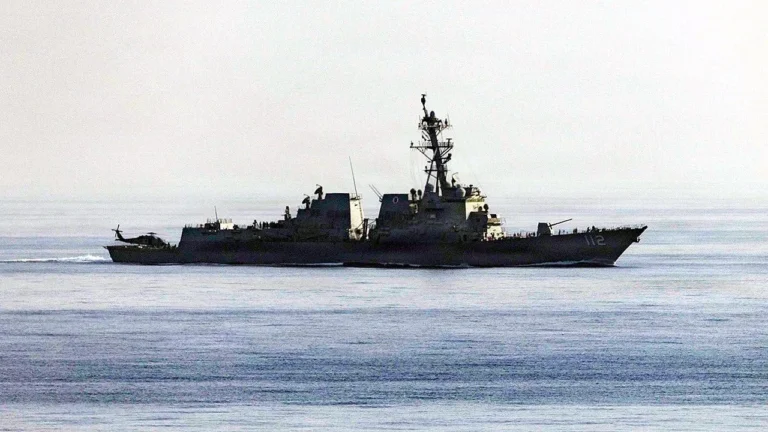
Hundreds of commercial vessels remain stranded on both sides of the Strait of Hormuz after Iran closed the vital shipping route on April 18, halting traffic and leaving crews facing dangerous conditions, including reports of gunfire and distress at sea.
The Strait of Hormuz—through which roughly one-fifth of the world’s oil supply passes—is widely regarded as a critical global energy corridor. Under international law, including the United Nations Convention on the Law of the Sea, it is considered an international waterway where ships are entitled to transit passage.
Despite that status, maritime activity has been effectively frozen, disrupting global energy flows and heightening tensions in the region.
The UK Maritime Trade Operations reported that Iranian gunboats opened fire on a tanker the same day the closure was enforced. In a separate incident, a projectile struck a container vessel, causing damage to its cargo.
The escalating security risks have left shipping companies and crews in a state of uncertainty as they await clarity on when safe passage through the strait might resume.