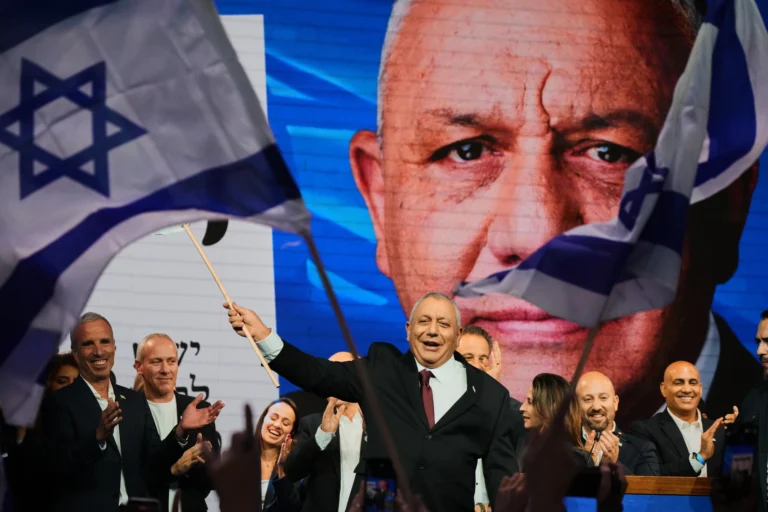
The decision, announced Saturday, November 7, comes nearly two weeks after Israelis went to the polls on October 27 in an election that failed to produce a clear parliamentary majority for either of the country’s main political blocs.
Eisenkot, a former chief of the Israel Defense Forces and leader of the Yashar party, emerged as the preferred candidate after securing recommendations from political factions representing 67 members of Israel’s 120-seat parliament, known as the Knesset.
Netanyahu, who leads the Likud party, received the backing of 46 lawmakers, while another seven declined to endorse either candidate.
According to a statement from the Israeli President’s Office, Herzog reached his decision following several days of extensive consultations with political leaders, including both Eisenkot and Netanyahu.
The president has invited Eisenkot to his official residence on Sunday, November 8, where he will formally receive the mandate to begin negotiations aimed at establishing a new coalition government.
Despite securing the support of a majority of lawmakers during the presidential consultations, Eisenkot faces a challenging task in building a workable governing coalition.
Under Israeli law, he will have 28 days to assemble a government capable of commanding parliamentary confidence, with the possibility of a 14-day extension if additional negotiations are required.
The election results left Netanyahu’s political bloc with 53 seats, while Eisenkot’s alliance secured 48. Arab-led parties won the remaining 19 seats, making their support potentially decisive in determining the next government.
However, significant political differences between the parties could complicate coalition negotiations, particularly over security policies, military service and cooperation with Arab political factions.
Eisenkot’s selection does not automatically make him prime minister, as he must first secure sufficient parliamentary support to establish a functioning government.
The development represents a major challenge to Netanyahu’s continued leadership, following an election dominated by national security concerns, Israel’s conflict with Iran and criticism of the government’s handling of the war in Gaza.
Eisenkot, who entered politics after serving as Israel’s military chief, has positioned himself as an alternative to Netanyahu’s leadership.
His emergence as the preferred candidate reflects a possible shift in Israel’s political direction, although negotiations could still produce an alternative governing arrangement.
If Eisenkot fails to form a government within the allotted period, Herzog could offer another candidate, potentially Netanyahu, an opportunity to build a coalition.
Failure to establish a viable administration could ultimately force Israel into another election.
For now, Netanyahu remains in office in a caretaker capacity as Eisenkot prepares for negotiations that could determine whether Israel experiences a change in leadership.
The coming weeks will be crucial in deciding whether Eisenkot can translate his parliamentary endorsements into a stable governing coalition and bring an end to Netanyahu’s current tenure as prime minister.