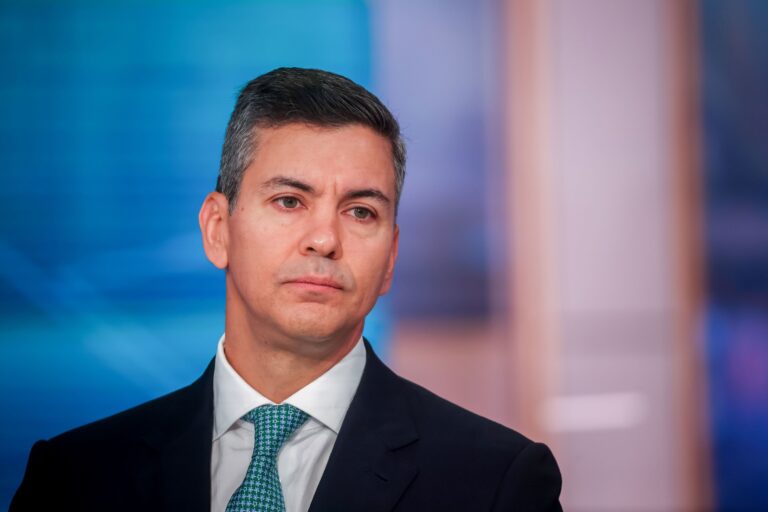
Peña was placed under house arrest on Friday, November 6, shortly after lawmakers voted overwhelmingly to remove him from office over allegations of financial misconduct and abuse of power linked to the collapse of Ueno Bank.
The impeachment received unanimous support from all 44 senators present, including members of Peña’s own political party, with one lawmaker absent from the proceedings.
The former president had offered to resign on Thursday as public outrage intensified. However, lawmakers proceeded with impeachment rather than accepting his resignation, stripping him of the legal protections normally granted to former presidents.
Peña, who previously held shares in a company connected to Ueno Bank, has denied any wrongdoing.
The political crisis erupted earlier in the week after Paraguay’s central bank intervened in Ueno Bank, a major digital financial institution serving nearly three million customers.
The bank’s collapse left a substantial portion of the country’s population unable to access their savings, pensions and other financial resources.
Long queues formed outside bank branches in the capital, Asunción, on Tuesday and Wednesday as desperate customers attempted to withdraw their money.
The disruption quickly triggered widespread anger, with thousands of protesters taking to the streets demanding access to their funds and accountability from government officials.
Some demonstrations escalated into confrontations with security forces, prompting police to deploy tear gas and water cannons to disperse crowds.
The financial emergency has raised serious concerns about regulatory oversight, banking stability and the protection of depositors’ funds.
Peña’s removal followed allegations that his administration failed to properly regulate Ueno Bank because of potential conflicts of interest involving his previous business connections.
Lawmakers accused the former president of interfering with financial oversight, diverting pension funds and participating in an alleged institutional cover-up involving the country’s central bank.
Prosecutors are investigating suspected breach of trust, influence peddling and misappropriation of funds.
Prosecutor Silvia Margarita González Vester confirmed that Peña was expected to face questioning on Saturday as investigators examined his alleged involvement in the financial scandal.
Despite the allegations, Peña has maintained his innocence, insisting that he did not engage in any illegal activity.
In a video statement posted on X, the former president expressed regret over the crisis and said his priority remained restoring confidence among citizens who had entrusted their savings to the country’s financial institutions.
Following Peña’s removal, Vice President Pedro Alliana was sworn in as Paraguay’s interim successor and is expected to serve the remainder of the presidential term until 2028.
In his first remarks as president, Alliana promised to prioritize the financial security of millions of affected citizens and ensure that depositors receive compensation.
He assured Paraguayans that the government would not abandon those suffering financial hardship as a result of the banking collapse.
However, questions remain over how quickly affected customers will regain access to their funds and whether the new administration can restore confidence in the country’s financial system.
Senate President Basilio Núñez announced that Peña had been found guilty of failing to properly discharge his presidential responsibilities, formally bringing his administration to an end.
The impeachment marks a dramatic political downfall for a president whose removal was supported by lawmakers from both the opposition and his own governing party.
As investigations continue, authorities face mounting pressure to recover affected funds, establish accountability and prevent further instability in the banking sector.
For millions of Paraguayans, however, the immediate concern remains the recovery of their savings and pensions.
The crisis has exposed serious weaknesses in financial oversight and sparked renewed demands for transparency, accountability and stronger protection of public funds.
With a new president taking office amid widespread public anger, Paraguay now faces the difficult task of restoring political stability and rebuilding trust in its financial institutions.