In a report released Friday, November 27, the Food and Agriculture Organization (FAO) and the World Food Programme (WFP) identified Sudan, Yemen, South Sudan, Somalia and northern Nigeria as the areas facing the most critical food emergencies.
The joint Hunger Hotspots report, covering December 2026 through May 2027, warns that worsening violence, economic instability and climate-related disasters could push more communities into severe hunger without urgent international intervention.
All five areas have repeatedly appeared among the world’s most serious hunger emergencies since 2022, highlighting the prolonged nature of the humanitarian crises affecting their populations.
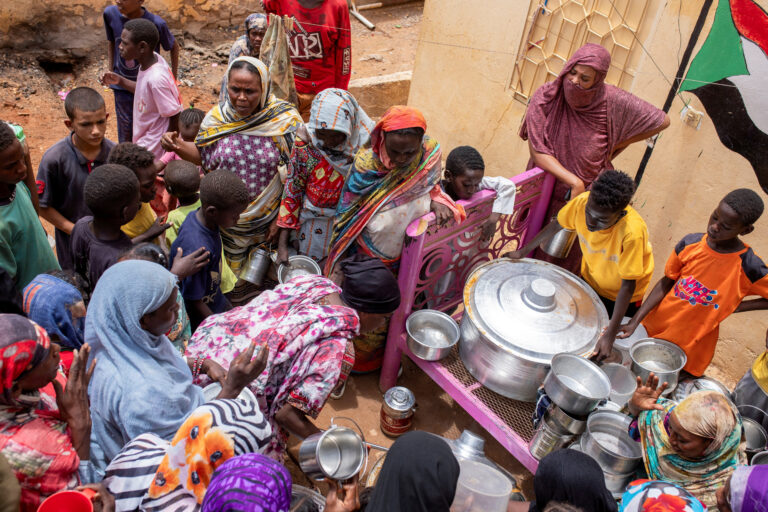
Sudan remains one of the countries most severely affected by food insecurity, with the ongoing conflict continuing to devastate agricultural production, disrupt food supplies and force millions from their homes.
According to the UN report, nearly 19.5 million people, representing approximately 41 percent of Sudan’s population, were experiencing crisis-level hunger or worse in the latest nationwide assessment.
The agencies warned that the risk of famine is expected to persist through January 2027 in 13 areas across North Darfur and South Kordofan.
In two displacement camps in South Darfur’s Eastern Jebel Marra region, acute malnutrition rates have already exceeded the threshold associated with famine.
The findings underscore the increasingly desperate situation facing displaced families who have limited access to food, healthcare and humanitarian assistance.
Sudan’s food crisis has been further aggravated by soaring transportation and energy costs linked to the ongoing conflict in the Middle East.
The report revealed that sorghum prices, a staple food consumed by millions of Sudanese households, have more than doubled over the past year.
Diesel prices have also risen by more than 100 percent, increasing the cost of transporting food and essential supplies to communities already struggling with shortages.
The combination of insecurity, inflation and disrupted supply routes has made basic necessities increasingly unaffordable for vulnerable households.
Humanitarian agencies warn that rising operational costs are also making it more difficult to deliver emergency food assistance to communities affected by the fighting.
Beyond the impact of armed conflict, extreme weather conditions are placing additional pressure on Sudan’s food production.
The UN agencies warned that drought associated with El Niño, a natural climate phenomenon involving unusually warm Pacific Ocean temperatures, is threatening agricultural output across several important farming regions.
According to the report, drought conditions have affected up to 55 percent of cropland in Sennar state and approximately 70 percent in Gedaref, two of Sudan’s major agricultural areas.
FAO Deputy Director-General Beth Bechdol warned that the drought poses an additional threat to a country whose agricultural sector has already been severely weakened by years of conflict.
The combination of reduced rainfall, damaged infrastructure, rising production costs and insecurity could further limit harvests and worsen food shortages in the coming months.
Yemen is also facing a deteriorating humanitarian situation following renewed fighting that began in July and has since spread across several areas.
The country has endured prolonged instability since 2014, when Iran-backed Houthi rebels seized the capital, Sanaa, prompting a Saudi-led military intervention the following year.
The latest escalation has displaced more than 300,000 people, primarily in Taiz, Lahj and Aden provinces.
The UN report warned that the encirclement of Taiz has created conditions resembling a siege, restricting the movement of people and essential supplies.
In government-controlled areas, approximately 1.8 million people are now experiencing emergency levels of hunger, an increase from 1.6 million recorded in the previous assessment.
The worsening security situation has also disrupted humanitarian access, leaving already vulnerable communities increasingly dependent on assistance that remains severely underfunded.
The Palestinian territories were moved down one level in the latest hunger risk assessment following the October 2025 ceasefire in Gaza.
However, the UN agencies cautioned that improvements remain fragile, with approximately 67 percent of Gaza’s population still experiencing crisis-level hunger or worse.
The report warned that any renewed fighting, disruption of humanitarian deliveries or deterioration in economic conditions could quickly reverse the limited progress achieved.
The worsening hunger outlook comes as international humanitarian organizations confront substantial reductions in financial assistance.
The FAO and WFP warned that shrinking aid budgets are undermining efforts to prevent famine, support agricultural production and provide emergency food assistance.
The agencies stressed that timely intervention is essential to preventing further deterioration, particularly in countries where conflict and displacement have already destroyed livelihoods.
Without sufficient funding, humanitarian organizations may be forced to reduce assistance even as the number of people requiring emergency support continues to increase.
The latest findings highlight the growing humanitarian consequences of armed conflict, economic instability and climate change, particularly in countries where millions of people already face severe poverty and displacement.
The UN food agencies are calling for urgent international action to strengthen humanitarian funding, protect vulnerable communities, restore agricultural production and ensure that food assistance reaches those most at risk.
With Sudan, Yemen, South Sudan, Somalia and northern Nigeria remaining at the highest level of concern, the coming months could prove critical in determining whether the global community can prevent further famine and widespread loss of life.
The report underscores an urgent warning: without immediate and coordinated intervention, millions of people could face even more severe food shortages as the global hunger crisis continues to deepen.