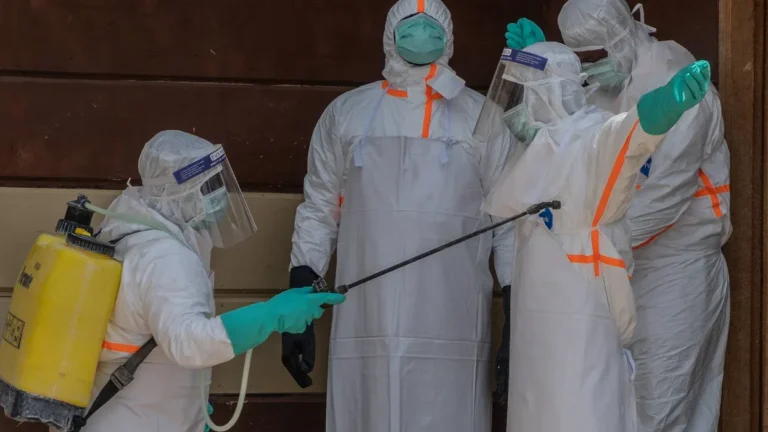
Health authorities in the Democratic Republic of Congo have reported one of the largest single-day increases in Ebola infections since the latest outbreak was declared, underscoring the challenges facing efforts to contain the disease.
The Ministry of Health announced on Sunday that 72 new Ebola cases had been recorded within a 24-hour period, bringing the total number of confirmed infections to 782. The death toll also rose significantly, with 32 additional fatalities pushing the number of confirmed deaths to 181.
Officials warned that the true scale of the outbreak is likely much higher. The outbreak was officially declared on May 15, weeks after health experts believe transmission may have begun. In addition, contact tracing efforts have weakened, with coverage falling to 56 percent, a sharp decline from the previous week.
The outbreak is being driven by the rare Bundibugyo strain of the Ebola virus, for which there is currently no approved vaccine or treatment. This differs from the more common Zaire strain, which was responsible for most of Congo’s previous 16 Ebola outbreaks.
According to the ministry, 56 patients have recovered so far, while the outbreak’s case fatality rate currently stands at 23 percent.
The World Health Organization said it is stepping up testing, contact tracing and treatment efforts to curb the spread of the virus.
Meanwhile, the Africa Centres for Disease Control and Prevention (Africa CDC) said it is deploying additional technical experts and strengthening laboratory systems, active case-finding operations and community engagement programmes.
“We remain committed to supporting affected countries until transmission is stopped,” said Jean Kaseya. “We call on partners and donors to urgently mobilize resources to strengthen the response and save lives.”
More than 90 percent of reported cases have been recorded in Ituri Province in eastern Congo, the epicentre of the outbreak. Additional infections have been confirmed in North Kivu and South Kivu provinces, while cross-border cases have also been reported in neighboring Uganda.
Containment efforts have been complicated by ongoing insecurity in the region. According to the United Nations humanitarian office, nearly one million people have been displaced by conflict in Ituri, making it difficult for health workers to track contacts and monitor potential infections.
The province’s dense forests, poor road infrastructure and remote communities further hinder response efforts, with some villages requiring days of travel to reach.