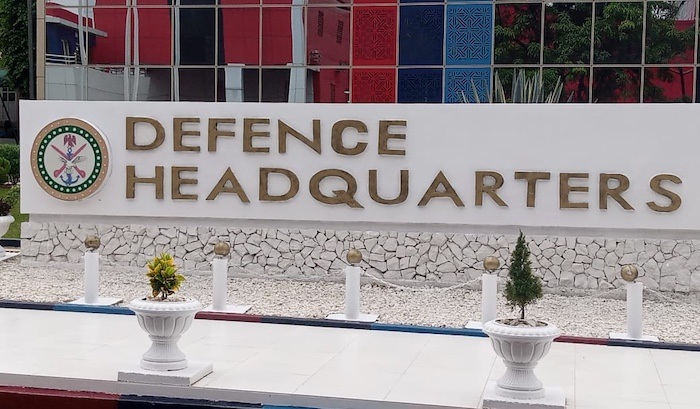
The Defence Headquarters (DHQ) has clarified the confusion surrounding reports on the death of ISIS commander Abu-Bilal Al-Minuki, attributing the controversy to the frequent use of similar names and aliases by terrorist groups operating in Nigeria and the Lake Chad Basin.
The clarification follows earlier announcements by former U.S. President Donald Trump and President Bola Ahmed Tinubu confirming that Al-Minuki, described as ISIS’ second-in-command, was killed in a joint Nigerian–U.S. military operation.
Questions were later raised online after claims emerged that the Nigerian military had previously reported a commander with the same name killed during a 2024 operation.
Reacting in a statement on Saturday, DHQ Director of Information, Samaila Uba, said the use of identical names, aliases, and nom de guerre is common among ISWAP and Boko Haram members.
“It is important to state that within the North East region and across the Lake Chad Basin, the use of similar or identical names, aliases and nom de guerre is common among ISWAP and Boko Haram terrorists,” the statement said.
“This is essentially part of their indoctrination programme which is aimed at deliberately obscuring identities.”
According to the DHQ, the Al-Minuki killed in the latest operation was positively identified through human intelligence and technical surveillance.
“The Abu-Bilal Al-Minuki eliminated on 16 May, 2026 has been positively identified through human intelligence and technical surveillance as a senior global operative within the Islamic State network, with direct links to international terrorist coordination, funding and operations across the Sahel,” Uba added.
“There is therefore no ambiguity in his identity.”
The military described the operation as a major breakthrough in ongoing counter-terrorism efforts and urged the public and media to rely on official sources when reporting security matters.
Meanwhile, the Presidency also addressed the controversy, describing the earlier 2024 report as a case of mistaken identity.
In a statement issued by presidential spokesperson Bayo Onanuga, it was explained that intelligence findings later showed that Birnin Gwari forest in Kaduna State — where the earlier operation took place was not within Al-Minuki’s operational area.
According to him, the latest operation followed months of intelligence gathering, surveillance, communication tracking, and phone interceptions beginning in December 2025.
He added that security agencies initially planned to capture the ISIS commander alive and monitored his movements across locations including Abuja and Maiduguri before authorising the final strike.
“Officials maintain that multiple layers of verification were applied before authorisation of the final kinetic action, making this operation distinct from earlier incidents in which battlefield assessments later required revision,” Onanuga said.