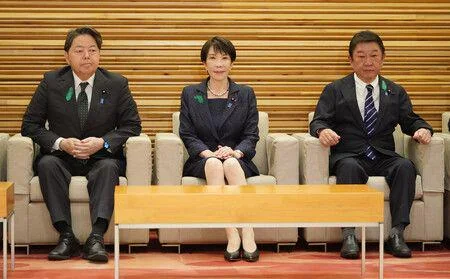
The cabinet of Japanese Prime Minister Sanae Takaichi has approved a significant policy change allowing the export of lethal weapons, marking a departure from Japan’s long-standing post-World War II pacifist framework.
Announcing the decision Tuesday, Takaichi said the revised rules would enable broader transfers of defense equipment to international partners, though specific systems were not formally detailed. Japanese media reports indicate the policy could cover items such as fighter jets, missiles, and warships, including those Japan has agreed to develop with Australia.
“With this amendment, transfers of all defense equipment will in principle become possible,” Takaichi said, adding that exports would be limited to countries committed to using the equipment in accordance with the United Nations Charter.
The move reflects Japan’s response to what officials describe as an increasingly complex global security environment. “No single country can now protect its own peace and security alone,” Takaichi said.
Reports suggest at least 17 countries may initially qualify to purchase Japanese-made defense equipment, with the possibility of expansion as additional bilateral agreements are reached.
Japan’s previous export restrictions, introduced in the late 1960s and strengthened in the 1970s, limited overseas sales to non-lethal equipment such as surveillance and mine-clearing tools.
While the new framework broadens export permissions, restrictions remain in place. Japan is expected to prohibit arms sales to countries actively engaged in conflict, though exceptions may be granted under special circumstances tied to national security considerations.
Countries reportedly interested in Japanese defense equipment include Australia, New Zealand, the Philippines, and Indonesia, according to local media citing the Ministry of Defense.