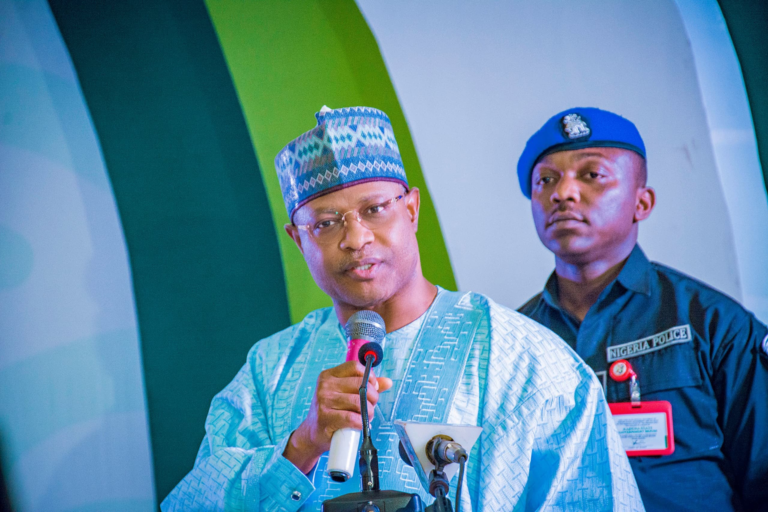
Governor Uba Sani has said Kaduna State is witnessing steady progress in security, infrastructure, and economic development since he assumed office in 2023.
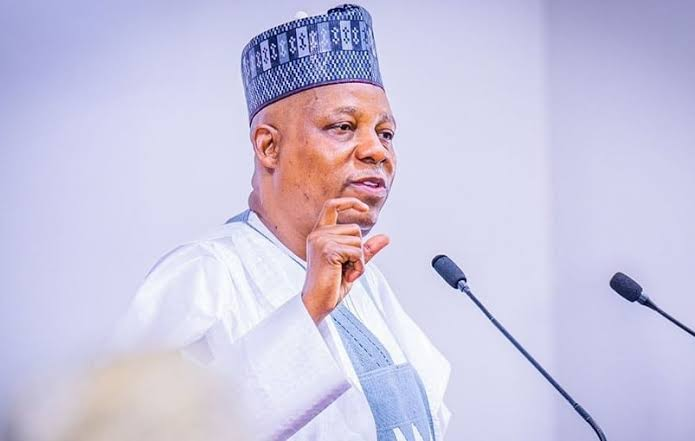
Speaking at a workshop organised by the Nigerian Institute of Public Relations during the Nigeria Public Relations Week, Croc City 2026, the governor noted that he inherited a state burdened by insecurity, weak social indicators, and infrastructure deficits.
According to him, his administration has moved away from incremental reforms, adopting a performance-driven governance model anchored on Key Performance Indicators to ensure accountability across ministries, departments, and agencies.
Sani outlined seven strategic pillars guiding his government security, infrastructure, institutional strengthening, trade and investment, agriculture, human capital development, and citizen engagement describing them as interconnected drivers of growth.
On security, the governor highlighted collaboration with the Office of the National Security Adviser and military authorities, leading to the establishment of new bases in Giwa, Birnin Gwari, and Southern Kaduna. He added that over 150 operational vehicles and 500 motorcycles have been deployed to security agencies, alongside the creation of a Joint Task Force to tackle crime.
He said the government has reclaimed over 20,000 hectares of farmland, resettled more than 1,000 displaced persons, and continues to support over 117,000 internally displaced persons. He also noted the establishment of Northern Nigeria’s first forensic laboratory and the launch of the Kaduna Incident Report Centre (KAD-IR) for real-time emergency response.
“Security is improving, confidence is returning, and economic activity is gradually expanding in areas that were once inaccessible,” Sani said, describing the approach as the “Kaduna Peace Model.”
In the education sector, the governor disclosed that 736 classrooms have been built, over 1,200 renovated, and 10,000 teachers recruited, with more than 33,000 personnel trained. He added that the number of out-of-school children has dropped significantly from about 550,000 to 187,720 within two years.
Sani also highlighted the establishment of an Institute of Vocational Training and Skills Development, aimed at equipping youths with skills in ICT, mechatronics, and renewable energy.
On healthcare, he said 255 primary healthcare centres have been upgraded, 23 centres of excellence created, and a 300-bed specialist hospital delivered.
The governor further revealed that about 150 road projects spanning over 1,300 kilometres are ongoing across the state, while agricultural investments have increased through fertiliser distribution, crop insurance, and agro-industrial projects.
He added that the state attracted over $743 million in investments between 2023 and 2025, with a pipeline of $2.77 billion, bringing total commitments to more than $3.5 billion.
On social intervention, Sani said over 2.5 million bank accounts have been opened for underserved citizens, with more than ₦18 billion disbursed in targeted support. He noted that the state’s free CNG mass transit scheme has served over 1.4 million passengers.
He also introduced “Project 255,” which allocates ₦100 million to each ward to ensure inclusive development across both urban and rural communities.