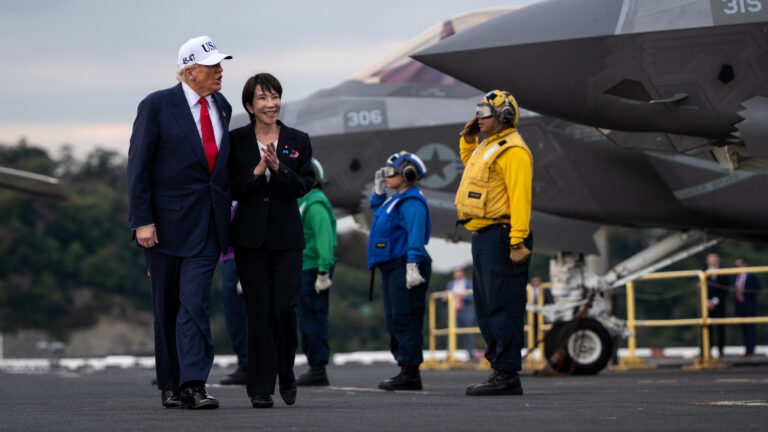
President Donald Trump is set to host Japanese Prime Minister Sanae Takaichi at the White House on Thursday, in a high-stakes meeting that could strain their recently strengthened relationship.
The two leaders have developed close personal ties in recent months, bonding over shared conservative views and mutual admiration, even as disagreements over trade have persisted.
That rapport now faces a significant challenge as Trump is expected to press Japan to contribute naval support to help secure and reopen the Strait of Hormuz, a critical artery for global energy supplies disrupted by the ongoing Middle East conflict.
According to officials, the U.S. is seeking the deployment of Japanese minesweepers and maritime forces to assist in clearing the waterway. Trump has also increased pressure publicly, suggesting Japan should step up in part due to its longstanding reliance on U.S. defense support and its heavy dependence on Middle Eastern oil imports.
The request places Takaichi in a politically sensitive position. Japan’s pacifist constitution limits the scope of its military operations abroad, and domestic support for involvement in the conflict remains extremely low.
A recent poll by the Asahi Shimbun found that only about 9% of Japanese respondents support the U.S.-Israeli military campaign against Iran.
As a result, Takaichi must balance alliance expectations with constitutional constraints and public opinion as she navigates her first White House visit since becoming Japan’s first female prime minister.