Global financial markets tumbled Monday after U.S. and Israeli strikes on Iran intensified geopolitical tensions, sending oil prices sharply higher and pushing U.S. stock futures down more than 1%.
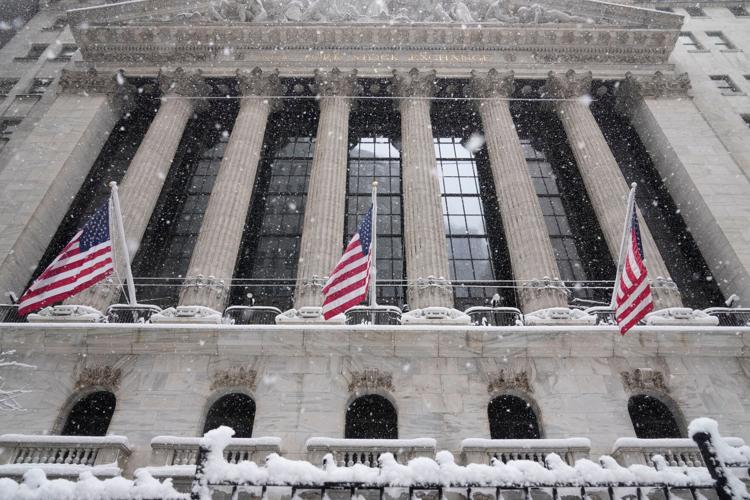
Futures for the S&P 500 and the Dow Jones Industrial Average fell 1.7%, signaling a weak open on Wall Street.
Energy markets reacted swiftly. U.S. benchmark crude surged 9% to $73 per barrel, while Brent crude climbed nearly 10% to just under $80 per barrel, reflecting fears of supply disruptions in the Middle East.
European markets opened firmly lower. Germany’s DAX dropped 2.2% to 24,737.47, France’s CAC 40 slid 1.9% to 8,413.91, and Britain’s FTSE 100 declined 1% to 10,800.63.
Across Asia, losses were widespread, though gains in oil and defense stocks helped cushion declines in some markets. Japan’s Nikkei 225 initially fell more than 2% before closing 1.4% lower at 58,057.24, with defense-related companies such as Mitsubishi Heavy Industries and IHI Corp. posting gains. Australia’s S&P/ASX 200 finished flat at 9,200.90.
In China, the Shanghai Composite rose 0.5% to 4,182.59, supported by energy shares including CNOOC, China Petroleum & Chemical and PetroChina, which hit their 10% daily trading limits. However, Hong Kong’s Hang Seng index fell 2.1% to 26,059.85.
India’s Sensex dropped 2.1%, reflecting concerns that the conflict could disrupt oil supplies critical to its economy. Taiwan’s benchmark index declined 0.9%, Singapore fell 2.3%, and Thailand’s SET index dropped 3.1%. Markets in South Korea were closed for a holiday.
Investors also sought traditional safe havens. Gold prices jumped 3.4% to around $5,426 per ounce, while the U.S. dollar strengthened to 157.20 Japanese yen from 156.27 yen late Friday. The euro slipped to $1.1708 from $1.1762.
Traders are betting the conflict could interrupt oil shipments from Iran and other producers in the region. Roughly one-fifth of global oil and liquefied natural gas flows pass through the Strait of Hormuz, a strategic chokepoint at the mouth of the Persian Gulf. Recent attacks on vessels transiting the waterway have heightened supply concerns.
Analysts warn that a prolonged conflict could drive up fuel prices globally, raising production costs and weighing on economic growth. Iran exports approximately 1.6 million barrels of oil per day, primarily to China. Any disruption could force major buyers to seek alternative sources, adding further upward pressure on prices.
China’s strategic petroleum reserves are not publicly disclosed, but estimates suggest they total between 1.1 billion and 1.2 billion barrels — roughly equivalent to about 100 days of imports.
Despite the volatility, some analysts noted that markets had partially priced in the risk of conflict following a significant U.S. military buildup in the region. As a result, the reaction, while sharp, was not more severe.
The escalation has temporarily shifted investor focus away from artificial intelligence stocks, which had driven much of the market’s gains in recent months.
On Friday, the S&P 500 fell 0.4%, marking only its second monthly decline in the past 10 months. The Dow dropped 1.1%, and the Nasdaq fell 0.9%. Bond yields also declined as investors moved toward safer assets.
Additional pressure came from economic data showing U.S. wholesale inflation rose to 2.9% last month, above economists’ expectations of 1.6%. Elevated inflation could complicate the Federal Reserve’s plans to cut interest rates, as lower rates might stimulate growth but risk reigniting price pressures.