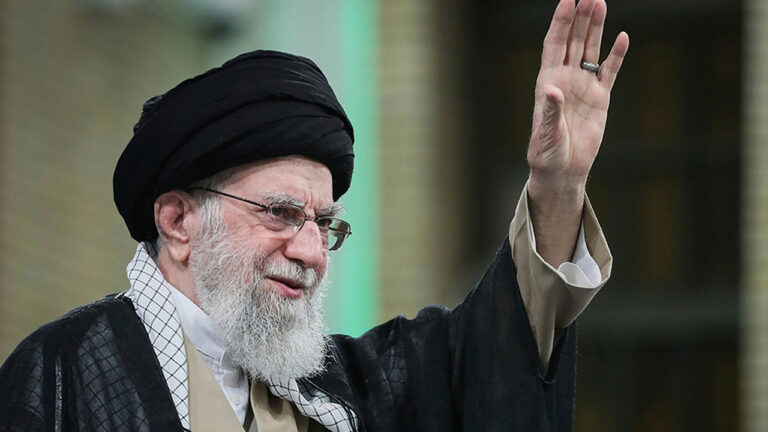
Ayatollah Ali Khamenei, Iran’s supreme leader for more than three decades, was killed during Saturday’s joint U.S.-Israeli strikes on Iran, President Donald Trump announced.
In a post on social media, Trump described the killing as “justice” for Americans and others around the world whom he accused Khamenei of targeting through Iran’s militant networks.
Iranian state television later confirmed Khamenei’s death.
Khamenei, 86, had led Iran since 1989, when he succeeded the country’s founding supreme leader, Ruhollah Khomeini, following Khomeini’s death. Khomeini had ruled for a decade after the 1979 Islamic Revolution that overthrew Iran’s monarchy.
Before assuming the role of supreme leader, Khamenei served as Iran’s president from 1981 to 1989. He was personally selected by Khomeini as his successor.
Under Iran’s constitution, the supreme leader holds ultimate authority over the country’s political system, military and judiciary — a position widely regarded as a lifetime appointment, according to the Council on Foreign Relations.
During the 2025 conflict with Israel, Khamenei had publicly vowed that Iran would not capitulate to external pressure.
“War will be met with war, bombing with bombing, and strike with strike. Iran will not submit to any demands or dictates,” he said in remarks published June 17 by Iran’s semiofficial Tasnim news agency.
It remains unclear who will assume leadership in Tehran. No successor has been publicly identified, leaving questions about the country’s political future amid escalating regional tensions.